Ghost Town Markets: Building Secondary Liquidity for Real-World Assets
Episode 2 · Live · 62 min
Tokenized real-world assets rarely trade. What would it take to build secondary markets for them?
Chapters 9
- 04:58Tokenized assets with no secondary market
Rado Patus frames the problem: plenty of tokenized assets and rails, almost no trading after issuance.
- 06:28Introductions
The panel introduces itself, and Renat Khasanshyn describes Protofire's early work on real-world collateral in the Maker ecosystem.
- 15:42Where secondary liquidity comes from today
Issuers and sponsors, existing offchain markets brought onchain, and genuinely new markets that are still very early.
- 20:38Which assets need liquidity at all
Why equities, commodities and FX are likelier to find onchain depth than private credit or real estate, and what tokenization is for.
- 24:37Tokenized money market funds as the test case
How tokenized money market funds show the problem even when the underlying asset is liquid.
- 26:18Pricing assets that do not trade
Why illiquid assets need NAV, reserve and redeemability-based prices, and what an oracle should and should not do.
- 32:00Who brings the liquidity
Issuers, market makers and liquidity providers, and why issuers often cannot provide the exit themselves.
- 39:34Discounts and distressed buyers
Whether discounted tokenized assets will attract specialist buyers, and how yield-bearing assets create their own demand.
- 47:11The one thing that has to happen first
Round-the-clock pricing, yield and paying liquidity providers for the risk they take.
Key takeaways
Secondary liquidity for tokenized assets comes mostly from issuers and project sponsors, with existing offchain markets onboarded where they exist and new markets still very early, Renat Khasanshyn of Protofire said. Jason Windawi of Pharos Network agreed.
Renat Khasanshyn, Protofire · 16:13, 17:58Jason Windawi, Pharos Network · 18:52See the quote
Not every tokenized asset needs deep onchain liquidity, Ivan Postavskyy of Centrifuge, Dillon Hanson of DIA and Zach Prater of Base agreed. Hanson sees equities, commodities and FX as likelier to get it than private credit or real estate.
Ivan Postavskyy, Centrifuge · 20:38Dillon Hanson, DIA · 21:24Zach Prater, Base · 23:42See the quote
Illiquid assets should be priced from NAV, reserves and collateral redeemability, Dillon Hanson of DIA argues. He and Alan Chiu of Boba Network agreed oracles should draw on existing appraisers and data providers instead of valuing one-off assets themselves.
Dillon Hanson, DIA · 27:02, 28:37Alan Chiu, Boba Network · 31:19See the quote
Issuers usually lack the cash to buy tokens back, Ivan Postavskyy of Centrifuge said, answering Dillon Hanson of DIA, who suggested they handle redemption. Postavskyy added that allocators want very liquid assets, citing an RFP asking for T+0 or T+1.
Dillon Hanson, DIA · 33:49Ivan Postavskyy, Centrifuge · 35:47, 36:21See the quote
Round-the-clock pricing comes first, Ivan Postavskyy of Centrifuge said, since nobody commits capital without knowing tomorrow's price. Dillon Hanson of DIA called 24/7 trading essential for pricing and expects institutional liquidity providers to follow as trading moves onchain.
Ivan Postavskyy, Centrifuge · 47:58Dillon Hanson, DIA · 48:48
Liquidity providers should earn the underlying yield plus a risk premium, Jason Windawi of Pharos Network suggested, building on what Alan Chiu of Boba Network said: yield-bearing assets draw buyers as prices fall. Renat Khasanshyn of Protofire seconded Windawi.
Alan Chiu, Boba Network · 50:53Jason Windawi, Pharos Network · 51:30Renat Khasanshyn, Protofire · 52:35See the quote
Across episodes:Banks and TradFi onchain
At the table



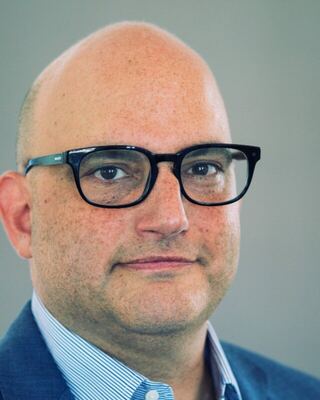









Speakers appear in a personal capacity; their views are their own and do not imply that their organisations endorse Protofire.
Disclosure: Protofire ported DIA's oracle to Midnight.
Key moments
Where does secondary liquidity for tokenized RWAs come from?
I would say three types that exist today. The first type is the pilot liquidity that the parties associated with either issuers or the project or the chain where it's on, right, they provide that liquidity. ... The second type is the existing secondary market liquidity that already exists outside of Web3, getting that onboarded if it does exist, right? And the third is creating new markets.
 Renat Khasanshyn, CEO, Protofire · 16:13
How much liquidity does an RWA need before it can get a price feed?
Our goal as an industry is to bring billions and trillions of dollars of RWAs on-chain, tokenize everything, and so to have a requirement that you need one to two million dollars of liquidity as a bare minimum even to begin getting started on a price feed to have utility for your asset is a very significant bottleneck that I think needs to be addressed and challenged.
 Dillon Hanson, Head of BD, DIA · 21:24
Does tokenizing an illiquid asset make it tradable?
For the illiquid assets, assets that are inherently illiquid off-chain, tokenizing them doesn't suddenly increase liquidity or demand for trading these assets. But there are certainly other purposes that tokenization could address by bringing these assets on-chain.
 Alan Chiu, Co-Founder, Boba Network · 23:07
Does every real-world asset need deep onchain liquidity?
I don't think everything needs to be tokenized. I don't think everything needs to be decentralized. I do think that there's certain real world assets out there, such as real estate, that don't really need that deep liquidity. ... I think there's going to be a niche market for almost every area within RWA, because it is way too big of an industry for just one focused approach.
 Zach Prater, Growth & Virtual Events, Base · 23:42
Do tokenized money market funds have a secondary liquidity problem?
It's also instructive to look at what's happened with tokenized money market funds. ... I think they're an interesting case because ... the underlying assets are really liquid, and yet you have some similar problems. ... So I think even when there is ... a much more liquid underlying ... those challenges are still there. And it may be that we find that the money market funds solve it for us first.
 Jason Windawi, Head of Institutions & Protocols, Pharos Network · 24:37
How should an asset without a market be priced onchain?
If the stablecoin is 100% collateralized by fiat, by its underlying asset, the effective value of that is one-to-one that of the fiat currency. If it's 90% collateralized and the redeemability of the asset is 90%, it should be priced theoretically at 90 cents on the dollar.
Dillon Hanson, Head of BD, DIA · 28:37How fast do institutional allocators want to exit tokenized assets?
Institutional liquidity providers or allocators, they're looking [for] high quality asset, understandable asset and super liquid. ... There was a high bar for the quality of asset, and they were looking [for] T+0 or maximum T+1 asset of liquidation. So nobody would like to block any more their funds for 12 or 24 months.
 Ivan Postavskyy, Ecosystem & Community Operations Manager, Centrifuge · 36:21
How can a long-tenor private credit fund offer shorter redemptions?
One thing that as an industry we would love to see from ... asset issuers is maybe an analog to TradFi, where you have multiple classes of a mutual fund. ... One of our affiliates ... is building a private credit fund that has normally a very long tenor in terms of redemptions, but they're wrapping that into successively shorter versions to allow more of a menu for the market.
Jason Windawi, Head of Institutions & Protocols, Pharos Network · 37:48How do yield-bearing RWAs create their own secondary market demand?
I'm bullish on bringing yield-bearing real-world assets on-chain. These assets have inherent value. They appeal to the fixed-income part of the market to begin with. And ... having yield-bearing assets also means as the price drops, the yield increases, and that helps to induce demand. And that's the beginning of creating a marketplace and generating liquidity and trading activities.
Alan Chiu, Co-Founder, Boba Network · 50:53Protofire's read
A real-world asset program needs a plan for the exit before it issues: who buys before maturity, how the asset is priced when nothing trades, and who acts when offchain collateral has to be liquidated. Allocators ask for those answers before they commit. Protofire builds the pieces for issuers, from reserve and NAV-based price feeds to permissioned secondary trading.
Renat Khasanshyn, CEO, Protofire
Go deeper
- Tokenized treasuries vs stablecoinsWhy tokenized treasury liquidity sits in issuer redemption, and how fast the main products redeem.Guide
- Tokenized private credit as collateralHow whitelisted holders can borrow against NAV-priced fund units, with liquidation agreed before the first pledge.Blueprint
- DEX core for a BaFin-licensed RWA venueThe DEX core and subgraph we built for Swarm Markets, launched under BaFin licenses.Case study
- Secondary market for tokenized RWAsA peer-to-peer venue where RWA holders exit positions, with optional rewards for liquidity providers.Service
Full transcript
7,930 words, edited for reading, with a link to every moment in the recording
Tokenized assets with no secondary market04:58
Rado Patus, Protofire · 04:58
And let me open this one. Okay, so Ghost Town Markets. So basically what we wanted to discuss today, and hopefully Renat will start it off, is to get through that we have basically tokenized... We have tokenized a lot of assets. We already have a bunch of rails. We already have a lot of assets on-chain. However, the secondary market for that is basically non-existent or very limited.
And to kick it off, if you guys can share your view on how do you see the market, what needs to be done to basically bring this liquidity on-chain, to basically set up the secondary markets for all and make this whole ecosystem life again. And well, your stage is free. Whoever wants to go ahead, just either raise your hand or start.
Renat Khasanshyn, Protofire · 05:40
Mm-hmm.
Rado Patus, Protofire · 06:10
So, and Renat, you are muted.
Jason Windawi, Pharos Network · 06:10
And yeah, I'm happy to.
Renat Khasanshyn, Protofire · 06:13
Yeah, how about maybe we do the intros, the introduction based on the agenda, right? We have, the first part is the intros, right?
Rado Patus, Protofire · 06:21
OK, sorry, then please have a round.
Introductions06:28
Renat Khasanshyn, Protofire · 06:28
Yeah, let's maybe start with... I can start. I'm leading lending, borrowing, RWA practice at the Protofire, where we solve the problems such as this one, right? For DeFi protocols, we worked closely, were involved in building MakerDAO, the multi-collateral DAI, collaterals that are now called RWAs. Starting in, I think, late '17, '18, when there was single collateral DAI, we were involved in building a number of projects, a total of seven projects that we were responsible for at Maker, including xDai, including one of the first assets that are now called RWAs, account receivables, joint ventures between... and Ivan is from Centrifuge, there we collaborated. At the time there was the joint venture between Maker, Centrifuge, dexFreight, where my role was, as interim risk team, to calculate stability fee, loan to value, debt ceiling, liquidation penalty.
Throughout that new collateral for multi-collateral DAI, we had to solve problems such as how do we ensure recourse for either the Maker holders, who ultimately take the loss in case the DAI minted does not come back and there is a bad debt, right? Or in case of junior tranche depositors of DAI into Centrifuge that take the risk. So how do we structure the SPVs? Where do we do them? What exactly the life cycle between a real world asset such as an invoice, and what kind of claim does
Renat Khasanshyn, Protofire · 08:48
the DeFi participant, whether it's combined Maker holders who are underwriting it and take the risk, or junior tranche depositors of DAI. That was six, seven years ago, where this has all started, right? And for me, the objective for the call is to come back to one of the largest elephants in the rooms, right? The problems that prevent the RWA from being the first-class citizen and truly show the potential: what happens after the asset is issued, even if we find liquidity providers, buyers of the asset, right? Which is quite hard to do if you don't have a way to get out of an asset that has maturity of, let's say, a year.
So we have fewer buyers for RWAs, and very hard reality to face for everyone who has high hopes or expectations. Let's tokenize these RWAs, it will always be great, but when it comes to when the rubber meets the road, it's a huge problem. And so how do we collectively as an industry address this problem? What approaches exist? What may be the low-hanging fruits? How can we evolve this?
This would be my kind of expectations for this call: topics to discuss, share notes on the topic, debate, find unsolved problems that, if solved, would truly unlock all of the value that is captured or trapped because of this problem is not addressed. That's all. Who's next?
Rado Patus, Protofire · 11:04
I will go one by one. So next one is Jason from Pharos.
Jason Windawi, Pharos Network · 11:12
Sure. Hi everyone. Jason Windawi here from Pharos. We are an L1 that, we have our TGE, we go live next week. So we're all a little focused on that right now, but our reason for being is that we are focused on what we call RealFi. So we're focused on bringing traditional finance, tokenized traditional finance, to the chain, and not only solving the issuance problem with great partners like Centrifuge, great to see Ivan here, but also working with DeFi lending protocols, working with vault providers, working with different ways to make sure that those assets are usable and that they provide interesting opportunities not only for asset issuers, but for capital providers, among a number of other things. So this topic is very much top of mind, and glad to be here. Thanks for the invitation.
Rado Patus, Protofire · 12:02
Thank you, Jason. Next one is Alan from Boba Network.
Alan Chiu, Boba Network · 12:09
Hi, everyone. I'm Alan, co-founder of Boba Network and CEO of Enya Labs. We are the core contributor to Boba. Boba is a layer 2 Ethereum blockchain that atomically connects unlimited off-chain compute to on-chain apps. And over the past 9 to 12 months, we've been working behind the scenes with ecosystem developers to bring real-world assets on-chain, and particularly identifying use cases that go beyond, that don't depend on having a vibrant secondary markets. So looking forward to exploring today's topic and projecting what's going to come in the RWA space in the future.
Rado Patus, Protofire · 12:58
Cool, thanks. Next we have Zach from Base.
Zach Prater, Base · 13:04
[unclear] My name is Zach Prater and I lead virtual events at Base. What I do is focus on distribution for pretty much anyone in our ecosystem. If you're launching something, I'm going to be the guy that helps you get on your go-to-market and helps you launch and have success. I'm very interested in RWAs. Before joining Base, I was the investment manager for a RWA platform called Rigor, or Home Construction Collective. We were focused on decentralizing the home mortgage industry to actually meet up with the demands required for home builders in Florida. I thought it was relatively interesting. We managed around 9.7 million of deal flow and built around, I think, 60 homes within a period of nine months.
So it's very interesting. I'm excited to kind of understand everyone's point of view for the growing RWA industry. We can all kind of attest that it is massive. It ranges anywhere between 2 to 30 trillion, and it's not a fast moving market. So there's a lot of amazing people in here, such as Centrifuge, [unclear], Boba Network, Pharos, and I'm excited to learn from all of them. Thank you for having me.
Rado Patus, Protofire · 14:18
Thanks, Zach. Guys, just housekeeping: if you're not speaking, please mute your microphones, because we get some echo. Thanks.
Rado Patus, Protofire · 14:36
Sorry. Next one we have Ivan from Centrifuge. Go ahead, please.
Ivan Postavskyy, Centrifuge · 14:42
Yeah, hi everyone. Thanks for having me. My name is Ivan. I work at Centrifuge as an operational ecosystem community manager, and Centrifuge is an institutional-grade infrastructure for on-chain asset manager.
Rado Patus, Protofire · 14:56
Cool, thanks. And the last but not least, Dillon from [DIA Oracles]. Go ahead.
Dillon Hanson, DIA · 15:02
Yeah. Hey everybody. Thank you for having me as well. I'm Dillon Hanson, I'm leading BD at DIA. DIA is an oracle provider founded in 2018. The product's been in production since 2020. We support 65 different networks today, L1s and L2s, and over 250 protocols since inception, some of which on the call today, Alan, and we work closely with Protofire as well. And I think reason for being here is DIA traditionally has a specialization in long-tail assets. And as we look into RWAs, we're really looking to tackle the problem of illiquid and thinly traded assets and how to price these on-chain. So great to be here, guys, and thank you for having me.
Where secondary liquidity comes from today15:42
Rado Patus, Protofire · 15:42
Okay, thank you all. So let's kick it off with more of an open question. How do you see the current market, the secondary market around RWAs? How it looks like currently? Where do you see the volumes? What do you, and your outlook, how it's going to behave and change in the very near future for you? So whoever wants to comment on that one, feel free.
Renat Khasanshyn, Protofire · 16:13
I can start. I see that basically there are like two types of secondary market liquidity. Or I would say three types that exist today. The first type is the pilot liquidity that the parties associated with either issuers or the project or the chain where it's on, right, they provide that liquidity. We recently did a project where the LPs were requiring ability to get out, and there was little choice except for the project sponsor to put their own [USDC] and be this buyer standing for the asset. The type one: the project sponsors or parties involved in making this happen.
The second type is the existing secondary market liquidity that already exists outside of Web3, getting that onboarded if it does exist, right? And the third is creating new markets, and that is in the [unclear], like very
Renat Khasanshyn, Protofire · 17:58
early stage of maturity, scale from 1 to 10, it's probably like 1.5. These are the three types, the ones that I could... how do I describe it? And so it's mostly the efforts of the project sponsors, those who facilitate them, make it happen. And if there is some existing liquidity, then it's attempted to be brought in, onboarded, but as far as creating new markets, it's extremely early, problem has not been solved. That's my take. Anyone else?
Jason Windawi, Pharos Network · 18:42
Yeah, happy to do it.
Rado Patus, Protofire · 18:42
I would love to hear that, you guys basically from the chains: what do you build currently, where do you see that?
Jason Windawi, Pharos Network · 18:52
I would echo what Renat said. I think that it's sort of an open space right now because it hasn't been defined. So a lot of the expectation is on the asset issuers, because they are the ones that have the most to gain from bringing the assets. But I am noting that as we're shifting as a space, which we need to do, away from just issue for the sake of issuing to actually starting to think about utility, there are that third category that Renat was mentioning, where there are markets coming up.
There are protocols like Cork and Multiliquid and 3F where there are efforts to not only just replicate the market maker model, but instead take liquidity providers, give them a return in return for their providing liquidity, and then use that to address the duration mismatch that's inherent in these assets that makes liquidation really difficult. Those are, as Renat said, those are very early days, but to me that seems like a very exciting model to think about for the future.
But in the interim, we're also of course seeing a lot of major asset issuers. I would maybe divide asset issuers into two types. So maybe there are ones that have one sort of headline fund. And then there are others that are more complexes of multiple funds, like the [unclear] Securitize offered, or Centrifuge offers, sorry, or Securitize. But I think that one model that's interesting is what DigiFT did by partnering with GSR. So they partnered with a huge market maker that was already in the space, and they were able to bring liquidity that way. So it's a question of where do you... it's the same old question, right? Where do you find the capital? How do you incentivize that capital to come? Who is that capital?
Jason Windawi, Pharos Network · 20:27
What do you do with it? And I think the more interesting solutions to that are just coming online and are likely to be what take us to the next step.
Which assets need liquidity at all20:38
Ivan Postavskyy, Centrifuge · 20:38
It also depends on the asset. Not all assets should be on the secondary market. For example, if you have the SPXA, which is like exposure of S&P 500, it's generate some interest, but what you will do with that asset? Can you actually use it on more... can you loop it in any way? There is, say, any secondary utility? So there is no one single answer for that. So it is complex solution, is solution with oracles, is definitely involving market makers, is involving distribution, sure, it is all in one. So not all assets should be liquid.
Dillon Hanson, DIA · 21:24
I would absolutely echo that as well. You see that, at least from the way I see it, it's assets that have liquid off-chain markets. So the RWAs that fall under maybe equities, commodities, and FX price feeds, these are most likely to get the on-chain depth of liquidity that's needed for good price feeds and robust DeFi operations. But when we then talk about private credit or real estate, luxury goods, one-offs, it's probably... there's not a market for this that would really be, to an extent, highly traded enough to incentivize market makers or liquidity providers to move on-chain and provide that liquidity on-chain.
And then you also... one thing I want to flag here is our goal as an industry is to bring billions and trillions of dollars of RWAs on-chain, tokenize everything, and so to have a requirement that you need one to two million dollars of liquidity as a bare minimum even to begin getting started on a price feed to have utility for your asset is a very significant bottleneck that I think needs to be addressed and challenged. Not every single asset is going to have such depth of liquidity on-chain. So I would agree with that, and it's very asset dependent from the way that we're looking at it.
Alan Chiu, Boba Network · 22:39
Yeah, these are great points, and building on these points, we got to ask ourselves, what is the purpose of tokenization when it comes to specific assets? In some cases, it might be to increase liquidity and broaden the market. And these assets probably already are enjoying quite a bit of liquidity off-chain anyways. And tokenization, it's just meeting the same kind of demand, and broaden and bring a supply to a different market.
Zach Prater, Base · 22:39
Keep it going.
Alan Chiu, Boba Network · 23:07
But for the illiquid assets, assets that are inherently illiquid off-chain, tokenizing them doesn't suddenly increase liquidity or demand for trading these assets. But there are certainly other purposes that tokenization could address by bringing these assets on-chain. But I think we got to be really clear about what is the point of tokenization when it comes to, let's say, commercial real estate or residential real estate or luxury goods, any sort of asset. It's not going to be the same purpose shared across all asset classes.
Zach Prater, Base · 23:42
So to kind of touch on that a little bit, just coming from the tokenized RWA side, I fully kind of agree there's no reason to tokenize a lot of assets. And I think that there's two areas of Web3 that we kind of focus on. There's tokenization, which we've already discussed. And then there's decentralization, which is the platform, and kind of opening up that platform for the global network or the global people to use. And I do agree, I don't think everything needs to be tokenized. I don't think everything needs to be decentralized. I do think that there's certain real world assets out there, such as real estate, that don't really need that deep liquidity. But I do think that... I think there's going to be a niche market for almost every area within RWA, because it is way too big of an industry for just one focused approach.
Tokenized money market funds as the test case24:37
Jason Windawi, Pharos Network · 24:37
Yeah, just to pick up on that and echo, I think that the fact that we're talking about this in the [context] of private credit is we're kind of doing this on hard mode. So we're taking the least liquid thing and trying to find a solution for it. But I think it's also instructive to look at what's happened with tokenized money market funds, which, to Dillon's and Alan's points about what is the underlying asset and what is its liquidity and what is the purpose, I think they're an interesting case because, A, the underlying assets are really liquid, and yet you have some similar problems.
But B, what I think is more interesting about them is, especially when you get to institutions and things like treasury management and payments and things that institutions will actually use tokenized money market funds for, they require different kinds of solutions than maybe we would see for private credit. And yet even there, it has been a challenge. You can sort of think of two models, or at least I think of it, you can think about the barbell, where on one extreme end you have BUIDL, that has set up something with Uniswap where there are market makers, but it's just a select group of whitelisted market makers. So it's still very, very small and very constrained.
The other extreme, you have the amazing thing that WisdomTree did, I think it was last month or the month before, where they got the regulatory exemption for principal dealer trading, which is incredible and allows for something that looks much more like what a corporate treasury might want from cash management. So I think even when there is a much more liquid token, or a much more liquid underlying, excuse me, those challenges are still there. And it may be that we find that the money market funds solve it for us first.
Pricing assets that do not trade26:18
Rado Patus, Protofire · 26:18
Yeah, thanks. Thanks for that. So we briefly touched it, and that was the how to price basically these low liquid or illiquid... So, assets that we mentioned, that there is a part which doesn't really necessarily need to be tokenized. But for those that needed, that makes sense to tokenize, and this will be mostly for Dillon, I guess: how do you guys see that we will eventually price, and basically price these low liquid assets, or how do you see that this can actually eventually work for you?
Dillon Hanson, DIA · 27:02
Yeah, I mean, zooming back to the original use case for the oracle, it's the data gap. It's the bridge of information between the off-chain world and the on-chain world. And so with RWAs, this is, I think, realizing the full potential of oracles to never before seen extent. I mean, historically, the way that the oracle looks at pricing is based on market trades on-chain. I think in any context where there's on-chain, deeply liquid, high volume markets where you can create a robust oracle price feed, still, my current outlook is that this should not still be the source of price for these assets. And I welcome any challenge on this, but from my perspective, this is the value for which a user is purchasing, acquiring the asset, and then lending and borrowing against it, looping it and creating actual DeFi utility on this, and then able to sell this.
This is the price for which you should be able to access DeFi strategies, the price at which you're buying and selling it. When we look at these off-chain illiquid assets, it goes well beyond just market-based price feeds now. So what's pretty exciting about this is a whole new range of methodologies for pricing these assets: looking at the net asset value, looking at the redeemability of off-chain collateral, looking at, yeah, the underlying collateral ratio, essentially.
Dillon Hanson, DIA · 28:37
So maybe I can zoom back out here. So once again, there's two ways of looking at this. One is the liquid markets. If you have a stablecoin that's backed by fiat currency, it's rather easy to... like, let's say you mint a stablecoin on-chain and it's backed by... it has no on-chain liquidity, but it's backed by five, 10 plus million dollars of off-chain collateral held in that fiat currency. You can go to the bank account, to the custodians where the reserves are being held, query the reserve values, and provide a collateral-based price feed for the stablecoin on-chain. So in effect, if the stablecoin is 100% collateralized by fiat, by its underlying asset, the effective value of that is one-to-one that of the fiat currency. If it's 90% collateralized and the redeemability of the asset is 90%, it should be priced theoretically at 90 cents on the dollar.
There's a blocker here that I want to also flag, is that now we need to look into the liquidation engine for this, just because it's held off-chain as collateral: who's going to be the one performing the actual liquidation of this and redemption of this when needed, when things might go south? So I think that's something the industry also needs to solve. And then, I don't want to go on too long. I'll maybe try to summarize on the more liquid side of things. But it's very tricky still, right? When we're looking at real estate or cars or any kind of one-off goods, I don't think it should be the oracle that's being the underwriter of this collateral. I don't think it's DIA or any other oracle that should come in and say, okay, your car is worth X amount.
The oracle's role is always to be a decentralized aggregation of different data inputs, different data providers. And so I don't think it's the oracle that has now the single source of truth responsibility of providing the price feed for this. In an ideal world, there's multiple different data companies and data providers that are valuing this. And we're starting to see there are infra providers coming on-chain, kind of Web3 native info providers that are reviewing PDFs, signing off on this using ZK and TEEs to actually provide this information on-chain securely. And the oracle should use them as data inputs and as a leverage source for benchmarking and guardians when you're valuing these off-chain illiquid assets.
Dillon Hanson, DIA · 31:00
Yeah, I'll stop there. I'm keen to hear how everybody else is looking at the problem as well.
Alan Chiu, Boba Network · 31:07
You mean DIA's not going to be sending armies of appraisers all around the world?
Dillon Hanson, DIA · 31:11
I don't know. We'll see what happens in the evolution, but at this stage, hopefully not. Yeah, exactly. Hopefully this will be solved in a more secure...
Alan Chiu, Boba Network · 31:19
No, your point makes total sense. I mean, just using real estate appraisal as an example, as a case study, right? It's an inherently high friction, infrequent exercise to price real estate. And there's already an existing off-chain infrastructure for generating these estimates. And so it would make the most sense for oracle providers such as DIA to tap into what's already working in the off-chain world and bring that data on-chain as needed, as it makes sense, rather than reinventing the entire stack.
Who brings the liquidity32:00
Rado Patus, Protofire · 32:00
Yeah, thanks for that. That's an amazing entry. And just to give my piece to this, I also think that we should price in... what we are still lacking as an industry is pricing, pricing also the risk. You didn't really mention that, touched it briefly, and you have different kinds of risks. And basically, those should be also priced in.
Anyway, let's move on. Let's say we will eventually solve this problem of reasonably and strategically pricing the assets. Now the really tough question comes about the liquidity. Basically, how to bring the liquidity to the secondary market? Who should be the responsible one? Which party? How to make it... how we all are actually going to make investors and LPs come to our secondary markets? And I would love to hear your opinions on how can we do it.
Zach Prater, Base · 33:16
I think that's the $30 trillion question, right? It's not just going to be one approach, and it's not just going to be one market. I think every liquidity provider is very interested in one specific area, and they're not necessarily open to other areas at times. So yeah, if anyone has the answer to that trillion dollar question, I'd love to know it, but I really don't think that there's going to be one approach or one easy way to answer that question.
Rado Patus, Protofire · 33:17
Thank...
Dillon Hanson, DIA · 33:49
Well, I'd like to flag and question you guys on something as well, for these illiquid assets. Why is it not just the tokenization platform, or the team that's actually tokenizing the asset, that's responsible for the minting and the redemption of the asset? It doesn't need to be that you go trade the asset on a DEX in order to sell it, but you can buy it from the tokenization provider itself. Then you hold the asset, and you can deposit it and access the DeFi capital utility or efficiency that you're looking for. And then when you go to sell it, it's the team that tokenized it, it's the platform that provided the minting of this, that you can then go redeem your collateral and sell it back to them.
Maybe this is the blockers, that they don't want this, they want it to be more one-sided. But if this is theoretically the team which is holding the collateral, this should be the team which then has the liquidity to pay out when you want to redeem that tokenized asset for the collateral, or for the cash equivalent of the collateral. And the oracle from that standpoint then gets the price from the issuer itself: the price at which the issuer is willing to buy back the asset in real time is the current price at which the market is pricing the asset. I don't know, maybe I'm missing a ton of things. There's a lot more expertise in the RWA sector on the call than in my end. So yeah, curious, I...
Renat Khasanshyn, Protofire · 35:19
Yeah, maybe Ivan, can you comment on that? How does it actually happens now, at least in the Centrifuge ecosystem, across different projects? Who's doing which approach, right? There is a good representative, I guess, ecosystem already in this. I mean, Centrifuge ecosystem quite mature, right? Already good, interesting data points on who's doing what.
Ivan Postavskyy, Centrifuge · 35:47
Yeah, definitely. I mean... Definitely. I mean, in 2019, when we all started, it was a really big boom of tokenization of real estate. And we did a good deal with Maker. We tokenized the first pool with real estate. It was New Silver, if I'm not wrong. But basically, when issuer is coming to tokenize the asset, he's actually looking for liquidity. He's lack of liquidity. So he's trying to fragmentate that assets and take back this liquidity. And there is different
Renat Khasanshyn, Protofire · 36:07
Yes.
Ivan Postavskyy, Centrifuge · 36:21
different tranches, like senior, junior, with different risk, with different risk profile and the asset maturity. So they should actually... right now, they never have the liquidity. So all they need to find somebody who can bring short-term liquidity for liquidation, but is also increasing the cost and lowering the APY, which is not happening right now. So right now, what we are seeing is that there is a big shift in the asset class. So we moved, at Centrifuge we moved from private credit, and we are working right now with 35 assets, like treasury bills, CLO, [JAAA], Apollo credit fund and S&P 500.
So institutional liquidity providers or allocators, they're looking [for] high quality asset, understandable asset and super liquid. If you checked three months ago, there was an RFP from Keel, they were looking for the assets. So there was a high bar for the quality of asset, and they were looking [for] T+0 or maximum T+1 asset of liquidation. So nobody would like to block any more their funds for 12 or 24 months.
Jason Windawi, Pharos Network · 37:48
Yeah, I think if I could just maybe build on what Ivan was saying, I think that one thing that as an industry we would love to see from Centrifuge and from other asset issuers is maybe an analog to TradFi, where you have multiple classes of a mutual fund, where there are different versions of it that have different sort of requirements. So it could be possible to have a version that is wrapped in such a way that it's usable in DeFi and liquidatable, or it could be possible to have a version that has different liquidity. That's something where one of our affiliates within our ecosystem is building a private credit fund that has normally a very long tenor in terms of redemptions, but they're wrapping that into successively shorter versions to allow more of a menu for the market to be able to use.
So I think there's room for... certainly we need liquidations, and happy to come back to that, but I also think there's a lot of room for asset issuers to innovate on structures themselves.
Ivan Postavskyy, Centrifuge · 38:48
Yeah, I mean, we definitely have... so we have four funds, and we also have deRWA tokens, which are fully transferable on the secondary market. The liquidity is not so great like with the fund, but it's still available. So definitely. And I think it is where the industry is moving also: even other tokenization platforms are providing the instant liquidity, and probably we'll see much more of this this year or next year, when you can immediately redeem your asset without waiting T+1 day and with quite high and deep liquidity.
Discounts and distressed buyers39:34
Rado Patus, Protofire · 39:34
Cool, thanks for the insights. Now, okay, so we discussed that we know how to price the assets, and with the liquidity, illiquidity basically comes also the discount arbitrage. So do you think that we will see a raise of these so-called, basically, vulture funds to sweep up whatever is left there?
Rado Patus, Protofire · 40:15
So...
Rado Patus, Protofire · 40:19
We don't have Renat, he just dropped. I believe he wanted to say something about it.
Jason Windawi, Pharos Network · 40:26
I'm happy to jump in. Because we can think about... a lot of these liquidations have to happen at a significant haircut, which is exactly this kind of distressed. And it's the mirror image of this distressed investing you're talking about, where the only reason you're willing to hold something to maturity is if you know you're getting it at a big enough discount that justifies your capital.
Rado Patus, Protofire · 40:28
Yeah, go ahead. Jason, go ahead.
Jason Windawi, Pharos Network · 40:50
And so in a sense, there's sort of a... we're mimicking that with a lot of the liquidation mechanisms that now exist for private credit, where people are willing, or for other things that we saw over the weekend, sometimes where something needs to be liquidated and others with capital step in and are willing to do it at a discount to justify mobilizing that capital. That's a pretty standard model. And so we could certainly see that evolving as an arbitrage opportunity for sure, and a way to do distressed, as is currently happening in TradFi. But it also seems to me that that's also kind of happening under a different name...
Jason Windawi, Pharos Network · 41:32
Or at least pieces of it.
Rado Patus, Protofire · 41:38
Okay. Dillon, do you guys see these increased, basically, demand on your oracles, or per se that this is actually happening already, or we are still expecting this?
Dillon Hanson, DIA · 41:55
Increase in demand for pricing of RWAs and off-chain illiquid assets? Yeah, absolutely. This is, not to be redundant here, but it definitely started with the high level, simple use cases. The quick, earliest ones for us were stablecoins based on fiat. This is my personal favorite, because it's the one which has scaled effectively. You're able to create a robust price feed
Rado Patus, Protofire · 42:00
Yeah.
Dillon Hanson, DIA · 42:25
based on the collateral that's being held there. More and more, the conversations are trending towards these more difficult ones, with not as much the asset issuer, but with the tokenization engine or protocol themselves. We have the roadmap, we have kind of the guidelines for how to price these when it's illiquid, when it's liquid off-chain assets. But again, it really becomes tricky when we're going into real estate, cars and whatnot. And there's good teams that are helping on this in the space. So if you guys are looking at Accountable, Octave Finance, there's other ones like Chain Risk. So it's growing within the space of people who are essentially providing on-chain attestations for, or rather not on-chain attestations, sorry, just proof of reserves and proof of solvency in dashboard overviews.
And on the DIA side, what we're doing is working with these teams and looking as to how we can leverage them for not necessarily the sole source of truth, but as benchmarks and as guardians as to the information that then the oracle is pushing on-chain. Again, the more data providers you can have around these proof of reserves and these proof of solvencies, the better. Ideally, this space trends in a way where there's enough high quality teams within that sector to create aggregation amongst them.
But still, unfortunately, it's on a very one-off basis. Each asset inquiry that's coming in that's based on an illiquid or thinly traded asset is very custom. It depends where the collateral sits, the collateral type, how many underwriters, what's the accessibility to the value of collateral. Are there banks providing APIs that are valuing this, or is it, again, written on PDFs that are stamped by
Dillon Hanson, DIA · 44:33
one person, and then you have to use that as the source of truth. And the problem again, to get back to the scaling here, is that everybody wants to find a way where you can have a factory model to price these. Not just on a one-off basis, but how can you build out a structure that prices these in almost like a factory setting, where inputs create outputs, and you can do this on a kind of more... automatically, on a level that scales. And we're not there yet. I don't think the industry is there yet. I think that these issues definitely still need to be really catered to and solved.
And this is what's exciting, nonetheless. I think that this is what creates us to stay online 24/7 in the space and find solutions. But yeah, that's my summary: when it comes to these off-chain illiquid assets, it's very much still on a custom one-by-one basis as to how you can access the valuation of collateral, where it sits, and which data providers you can also work with for benchmarks.
Alan Chiu, Boba Network · 45:39
When it comes to the business of buying distressed assets, it's only attractive if at the end of the day you have exit opportunities to unload the assets for a profit, right? And so there has to be some way to induce demand at some point to take these assets off your hands. Otherwise, regardless of how low the price is, if you can't unload it, it's kind of pointless. You're still going to get stuck. And so certain asset classes probably are just not going to fit that profile.
On the other hand, if we imagine, for example, bring some sort of yield generating real world assets on-chain, and that yield is shared to the on-chain asset holders, then even if there's a lock-up on the original capital for however long, and if the asset holder on-chain needs cash for some reason and needs to unload that at a discount, well, it's yield generating. So at some point, if the price is low enough, that means the yield becomes high enough that someone will want to take that off your hands. So when it comes to identifying opportunities for buying and selling distressed assets, I think some sort of that provides an example. If it's a yield-bearing asset, then there's a natural organic mechanism built in to induce demand at some point. And that eventually will create, start creating a market.
The one thing that has to happen first47:11
Rado Patus, Protofire · 47:11
Okay, cool. And we are closing to the end, guys. So now it's going to be a little more visionary question for you. If there was one thing you think that needs to happen before really these secondary markets for RWAs are real thing, not really aspirational but really a thing, and we will really see some liquidity and trading there, what would that be?
Rado Patus, Protofire · 47:51
Ivan, for example, you: what do you think will be the... would you like to see next?
Ivan Postavskyy, Centrifuge · 47:58
Yeah, I will probably agree with Dillon. So the assets should be priceable 24/7. So [unclear] the buyer investors, they should be sure about the price of that asset. Otherwise there is no way, or no reason, to get in that deal if you don't know what the price will be tomorrow or the day after tomorrow. Same is applicable for liquidity provider or curators. So I mean, nobody will put their money if they cannot calculate the risk, what will be the price tomorrow, or today actually. I mean, if you don't know the price, is actually the price of today, of the... how often oracle can query the price of that car, who is custodied... well, there's thousands of questions there, but the price is definitely important.
Dillon Hanson, DIA · 48:48
And maybe to quickly add on that. We're seeing obviously the intersection of kind of Web3 blockchain and traditional finance has never been stronger. And we're seeing that Web3 rails are actually challenging TradFi, right? We've seen equities markets are being challenged to extend trading hours. The CME as well. And we're seeing that now assets are starting to move to trading on centralized exchange venues. People are able to trade 24/7 perps on RWAs on some of these trading venues. Hyperliquid's done great at this.
And so as the challenge becomes greater, and accessibility to trading and accessing these assets moves on-chain, institutional capital, institutional liquidity providers will be challenged to also engage with this opportunity, I think. So as more and more users realize that the... or rather, as more and more trading activity is continually moving on-chain for these assets, in the intersection between Web3 and TradFi gets deeper, maybe this is one of the ideal solutions here, or rather, I guess, roadmaps feasibly moving forward, is that there's just more opportunity for traditional liquidity providers to move on-chain and provide liquidity for these RWAs on-chain.
Yeah, just bouncing off of Ivan's point there. Definitely 24/7 trading is essential for pricing a lot of these assets, especially when looking at how they're going to be priced across different DeFi protocols.
Rado Patus, Protofire · 50:36
Yeah, go ahead.
Ivan Postavskyy, Centrifuge · 50:36
It could be a good topic. It could be a good topic for the next panel: 24/7, if we really have the trading 24/7 right now, or it is just five to seven, and after it is just a synthetic price.
Alan Chiu, Boba Network · 50:53
I'm bullish on bringing yield-bearing real-world assets on-chain. These assets have inherent value. They appeal to the fixed-income part of the market to begin with. And as I brought up earlier, having yield-bearing assets also means as the price drops, the yield increases, and that helps to induce demand. And that's the beginning of creating a marketplace and generating liquidity and trading activities.
Jason Windawi, Pharos Network · 51:30
Yeah, if I could just build on what Alan just said, I completely agree. And I think that one of the things, if we're going to reach TradFi scale, we're going to need TradFi scale of liquidity and capital, which goes way beyond the original assets. One way to get there is to be sure to offer maybe more structured returns for people who are coming into the space, because right now it's really fragmented across market makers and liquidity pools and providers.
And I'm not saying this is the solution, but it seems to me that DeFi did something very elegant in creating liquidity pools. Sometimes they work, sometimes they don't, but they were a way to gather lots of different kinds of investors together and give them a return in order for providing this kind of capital for the market. It would be great if we had some kind of structure, not necessarily AMM liquidity pools, those probably aren't it, but some way to aggregate lots of investors such that they earn a return for providing that capital based on the underlying yield and also based on some kind of risk premium, and then be able to aggregate that. That seems a pretty rational way to go forward.
Renat Khasanshyn, Protofire · 52:35
Yeah, I second that. I recall a conversation. It was around the time when we were working on this early RWA pilots at Maker. And at the same event, I think it was Web3 Summit in Berlin, I was talking to Ryan Zurrer, who was at the time... he and Olaf, they were running basically Polychain. A question arise about how do you get people to do things that they have not done or not really willing to do. He said, why don't we just pay them? I still remember, it was on a different topic, but it really applies over and over again, right? If we want for the liquidity providers to come, right? Let's [pay] them. Let's bundle it in, right?
Rado Patus, Protofire · 53:53
Cool guys, I got one question from the Twitter, I believe. And it's a tricky one, but I'll read it out and let's see what you think. If a regulator says tomorrow tokenized private credit is a security, QIBs only, no permissionless rails, how much of your roadmap survives the week?
Jason Windawi, Pharos Network · 54:24
Didn't regulators recently say that tokenized securities count as securities? I think this is... So, but I think personally, I'm curious to hear what Ivan says about this, but I think that we have tools around tokenization that allow for a transformation of a security into some other kind of structure that...
Rado Patus, Protofire · 54:28
I believe so, so that's why...
Jason Windawi, Pharos Network · 54:46
for whatever regulatory reasons or legal reasons that are beyond my depth, but there are ways to package a security in the same way that a mutual fund or an ETF packages a lot of other securities into a slightly different legal structure. There are ways to build wrappers that will still make sense on permissionless rails, but it is tricky.
Ivan Postavskyy, Centrifuge · 55:09
I mean, yeah, just [unclear] for us.
Renat Khasanshyn, Protofire · 55:09
Yeah.
Rado Patus, Protofire · 55:15
Okay, so then we are safe.
Renat Khasanshyn, Protofire · 55:15
Ivan, so what's your take on how many ways you've seen where a security is packaged in a way that has different unique ways, where it becomes permissionless, transferable, purchasable without KYC? I'm sure you've seen... I can mention a few, but you probably have a much bigger variety of how many of them you've seen.
Ivan Postavskyy, Centrifuge · 55:44
Oh, is it... There were many. I think that last year and this year we see much more of them. Like at Centrifuge, Apollo credit fund, this one is definitely security, and [deCRDX] is free transferable on the secondary market. But if you will do onboarding, you still need to do KYC. So there is no way that you can get rid of this. So you need to follow regulation. Like, US citizens are not allowed. So there is all rules and laws that you still obey and follow. So, this...
Renat Khasanshyn, Protofire · 56:17
Correct. Well, I've seen a number. Maybe we need to be counting and putting more color and education about it. But how it seems to me is that, if, and let's say, let's talk about the US in particular, right, because if we talk about different countries all combined, it becomes a mess, incorrect statements, right, because every generalized statement is wrong, including this one, right? And so if we just focus on the US, so from a US perspective, right, if you sell to US buyers, that's one story. If you sell to non-US buyers, it's completely different story.
And if you don't sell to US buyers, then if non-US people, as long as you can have... if you want to do it really, really straight and properly, you need to make sure that they're non-US. If you can prove that they're non-US, how you do it, what you use, it's up to you. Do you have a good enough proof that these are not US people? But these are technicalities. In practice, what I believe... Rado, answer to a question, right? It's kind of a very loaded question. But how I see it is that, let's say we start with security,
Renat Khasanshyn, Protofire · 58:03
that is... no one is arguing, is it security or not, from, let's say, US Howey test, right? It does not fail none of the four prongs, right? It's clearly a security. We all agree on it, right? And then on the other side, we have something that is permissionlessly viable, right, on Uniswap, without any KYC, right? What I believe, what happened, what is happening in between, right, it's the question of the person who is buying that on Uniswap
Renat Khasanshyn, Protofire · 58:40
is not a security. It's not the same thing that was originally issued. It's something else. And what that is, that something else that you are buying, right? What I've seen is you're buying a certificate. Are you buying a share, equity? No. Are you buying that? No. What are you buying? You're buying a certificate, which is the issuer of that certificate, legally, in that particular case. And I'm not going to drop names of that, but everyone who will dig, they will, we all know the players, right? That certificate gives you the right to come to the issuer, right? That is a legal entity, and according to the agreement that you have as a holder of that certificate, they will do their best to redeem it.
Are they obligated? No. Are you redeeming a share in the company, in SPV? No. Is it the debt of the company? No. Did they take a loan from you? No. So how much of that strength, or the properties, I guess, the recourse or the quality of that claim, what does this token represent? It's like 50 shades of strength and claim and rights that you have when you bought it, right? So if you buy that token, it's a matter of what rights does it come with, with this token, right? And how many rights? Is it economic rights? Is it governance rights? Is it some other forms of rights?
So it's a matter of not looking at it black and white, right? No doubt, no question about that: under the hood, what the source of appreciation, or the why would someone buy it, right, is to invest, right? But the amount of rights that comes with what you buy on Uniswap is completely different set versus the rights that a purchase of a security gives the buyer, right? So that's my take: how much rights
Renat Khasanshyn, Protofire · 1:01:00
do we want to bundle? Can we bundle? And how much rights would be enough for the buyers to buy? That's kind of where the question, rather, you ask, it turns into: sure, you want permissionless DeFi, great. How much and what kind of rights would come to the buyer of that token? But certainly, it's not a security itself that you are getting. Without KYC, you cannot buy security.
Rado Patus, Protofire · 1:01:32
Yeah, that was really more like theoretical question, and more like to spread, to have some thoughts.
Renat Khasanshyn, Protofire · 1:01:41
Mm-hmm.
Rado Patus, Protofire · 1:01:41
Anyway guys, we are pretty past over. So I would like to thank you all, this was a very great talk. We will be dropping links to your particular projects in the chat below on the Twitter, so that people can follow you and basically see what you do, what you are working on. It's been great talking to you all, and to the audience, and well, I wish you all good luck with your projects, and see you on some next panel, guys.
Renat Khasanshyn, Protofire · 1:02:17
Yeah, let's do it again with you guys. Let's compare if things get better over time. Thanks, bye.
Alan Chiu, Boba Network · 1:02:20
Thanks everyone, was a pleasure.
Dillon Hanson, DIA · 1:02:24
Thank you.
Ivan Postavskyy, Centrifuge · 1:02:24
Thanks everyone, thanks for having me. Bye-bye.
The next table has an empty seat
We invite founders and senior leaders building onchain finance in payments, banking and blockchain protocols. Tell us who you are and what you would like to discuss.
- In good companySpeakers so far have come from J.P. Morgan Payments, Circle, Fireblocks, Base and Polygon Labs.
- On the recordYour episode gets its own page with your key quotes and the full transcript, built so search engines and AI assistants can find and quote it.
- Among peersA conversation with people solving the same problems from other sides of the market.