Credit Markets on Demand
Episode 3 · Live · 66 min
Launching a token takes minutes and a lending market still takes months. What would it take to deploy credit markets on demand?
Speakers from Midnight Foundation, Pharos Network and DeFa, with two Protofire Venture Studio companies, Arenas and Fuero, on which lending is proven, how chains choose lending markets, what liquidity providers ask for and who acts when collateral has to be liquidated.
Chapters 10
- 00:00What it takes to build and run a lending market
Andrei Yurkevich sets the question: what each part of the ecosystem needs from a lending market.
- 01:41Panel introductions
Speakers from Midnight Foundation, DeFa, Arenas, Fuero and Pharos Network introduce what they build.
- 05:59Which lending is already proven
Overcollateralized crypto lending is battle-tested; the open frontier is real-world credit with its own protocols and investors.
- 16:06How chains decide which lending markets to host
What Gareth Christian-Lim weighs before a chain hosts a lending market, and why Ran Wei wants lending and looping to replace yield subsidies.
- 21:49Choosing a chain
Ecosystems, borrowers and originators now weigh as much as speed, with distribution and compliance close behind.
- 31:43What comes next
Compliance, privacy with selective disclosure and new lending architectures.
- 38:03The borrower's dream feature
A chain-agnostic compliance layer that can decrypt borrower data case by case, and liquidity that reaches borrowers when they need it.
- 42:29What liquidity providers want
Risk-adjusted yield, fast withdrawals, transparency on borrowers and room to scale allocations.
- 52:52Audience questions
Invoice financing onchain, and whether incumbents will own onchain credit.
- 58:49AI agents in lending markets
From agents as a tool for risk monitoring to agents that eventually hold the keys.
Key takeaways
Overcollateralized crypto lending is largely proven, Luis Medeiros of Protofire and Alejandro Losa of Fuero agreed. For real-world credit, Muhammad Salman Anjum of DeFa said each credit type needs its own protocol, operations and specialized investors.
Luis Medeiros, Protofire · 10:43Alejandro Losa, Fuero · 12:11Muhammad Salman Anjum, DeFa · 09:38
Fixed-term, fixed-rate lending suits real-world collateral, said Ran Wei of Pharos Network, since it can lack DEX liquidity, an oracle price feed or instant withdrawal. Luis Medeiros of Protofire agreed lenders increasingly want fixed terms.
Ran Wei, Pharos Network · 14:30Luis Medeiros, Protofire · 43:04See the quote
Builders now judge chains by ecosystem as well as technology, said Luis Medeiros of Protofire, Muhammad Salman Anjum of DeFa and Alejandro Losa of Fuero: Medeiros looks for real borrowers, Anjum for institutional LPs, Losa for distribution.
Luis Medeiros, Protofire · 22:11Muhammad Salman Anjum, DeFa · 24:23Alejandro Losa, Fuero · 27:23See the quote
Onchain credit needs selective disclosure, three speakers argued. Muhammad Salman Anjum of DeFa said deal data cannot be public; Gareth Christian-Lim of the Midnight Foundation and Alejandro Losa of Fuero want private data that regulators can still see.
Muhammad Salman Anjum, DeFa · 24:23Gareth Christian-Lim, Midnight Foundation · 35:00Alejandro Losa, Fuero · 38:57See the quote
Chains can rely less on incentives, said Ran Wei of Pharos Network and Gareth Christian-Lim of the Midnight Foundation. Wei would replace subsidies with lending and looping; Christian-Lim wants liquidity that stays in the ecosystem.
Ran Wei, Pharos Network · 19:03, 19:31Gareth Christian-Lim, Midnight Foundation · 30:17
Liquidations can stall because policies do not authorize smart contracts or security firms to act, said Ran Wei of Pharos Network. He, Luis Medeiros of Protofire and Muhammad Salman Anjum of DeFa see AI agents as assistants for now.
Ran Wei, Pharos Network · 1:02:16Luis Medeiros, Protofire · 1:04:47Muhammad Salman Anjum, DeFa · 1:01:00See the quote
At the table







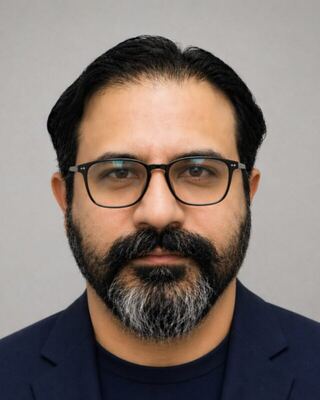



Ran Wei
Head of DeFi
Pharos Network
Speakers appear in a personal capacity; their views are their own and do not imply that their organisations endorse Protofire.
Disclosure: Arenas and Fuero are Protofire Venture Studio companies; Luis Medeiros and Alejandro Losa are part of the Protofire team.
Key moments
Can onchain credit work without collateral?
I feel like the market already has the collateral having the trust in order to have a lending for an anonymous counterparty. What we want to do is the opposite. We want to know the borrower so we don't need to trust on the collateral, so we can give this lending.
 Alejandro Losa, CEO & Co-Founder, Fuero · 12:37
What would bring institutional LPs into onchain lending?
And transparency sometimes isn't the solution, but the trust is the solution. And so we're looking at from a very much a privacy side of being able to selectively share certain bits of information to validate and verify that the asset or the person, the counterparty, is viable for that lending.
 Gareth Christian-Lim, Director of Growth, Midnight Foundation · 13:16
Do grants matter when a lending protocol picks a chain?
The ecosystem support means that the foundation of that particular chain is enabling you to ... meet and connect with the LPs in their community. Institutional LPs I'm talking about. ... The grants and these kind of petty ecosystem enablements, which probably are good for the early stage projects, but if you are really looking for a growth, then grants are not the one thing which you need to see.
 Muhammad Salman Anjum, CEO & Founder, DeFa · 24:23
What do liquidity providers want from onchain credit markets?
One common problem is liquidity, right? How quick can I withdraw? ... It gets even more complicated when we're talking about real-world assets that have at least 30, 60, 90 days payback. ... one thing ... that's becoming really important is fixed yield, fixed terms. ... And then there's a problem ... the capacity, right? Okay, you can allocate ten million, can allocate one hundred million, can you allocate two hundred million?
 Luis Medeiros, Field CTO and CEO of Arenas.fi, Protofire · 43:04
How do new lending markets solve the liquidity cold start problem?
We need to solve the cold start problem. And I think the best way to solve it is to find the anchor LP who might invest the one million, two million there ... So normally the retailers, they feel comfortable only if ... there are several million already existing there.
 Ran Wei, Head of DeFi, Pharos Network · 46:08
What is know your agent (KYA) in onchain lending?
You have KYC and KYB and AML checks. We've got KYA, which is know your agents. So the ability to have personalized agentic solutions that will trade on your behalf ... and to be able to borrow and lend on your behalf. ... I think it's for us to enable ... the guardrails to ensure that it's done in a very fair and compliant way.
Gareth Christian-Lim, Director of Growth, Midnight Foundation · 1:00:10Why do onchain liquidations sometimes happen hours late?
Sometimes, for example, the curators was asleep when something happens. So it took them three to five hours to really ... get up and sign the multisig wallet and liquidate the assets. ... It's not because of the technology, but because of the company policy ... They don't give the authority to those smart contracts or the firms to basically monitor and directly execute the transaction.
Ran Wei, Head of DeFi, Pharos Network · 1:02:16Protofire's read
A lending market needs borrowers and originators on the chain, fixed terms and NAV pricing for real-world collateral, compliance with selective disclosure, and an operations team with the authority to act on a liquidation alert at any hour. Protofire builds and runs that operations layer for lending protocols and chains.
Andrei Yurkevich, Co-Founder, Protofire
Go deeper
- Agentic payment protocols comparedHow x402, MPP, AP2, ACP and card programs let AI agents pay, side by side.Guide
- White-label lending platformA branded credit market live in 3 to 6 months, with credit delegation for day-one liquidity.Service
- Managed onchain operationsA 24/7 team that acts on liquidation and collateral alerts under a pre-agreed authority matrix.Service
- Infrastructure for specialty financePrivate credit, invoice factoring and trade finance on a credit engine built for non-crypto collateral.Industry
Full transcript
8,912 words, edited for reading, with a link to every moment in the recording
What it takes to build and run a lending market00:00
Andrei Yurkevich, Protofire · 00:00
Across three channels: X, LinkedIn, YouTube. Now, my name is Andrei Yurkevich. I'm a founding member of Protofire. And today we're speaking about lending markets. What it takes to build and run the lending market, what various members of the ecosystem expect from lending markets. What does the lending market define in the DeFi ecosystem in general? And we have awesome panelists today representing retail credit products, lending marketplace, and two blockchains, Midnight and Pharos. Actually, the participant from Pharos did not join us yet. Hopefully they will be able to join a little bit later, but if not, then this side of the market will be awesomely represented by Midnight.
So we'll start with the questions that I prepared for the audience, and then we will have possibility to take questions from the public. So please reply on a social media post in the channel that you're using. And if we have time, we'll be happy to answer your question in this session, or otherwise we will just answer your question later in written form on Twitter or X or YouTube. Alright guys, so let me give a chance to our panelists to introduce themselves. Let's start with Gareth from Midnight.
Panel introductions01:41
Gareth Christian-Lim, Midnight Foundation · 01:41
Thanks very much, and great to be here. My name is Gareth. I'm from the Midnight Foundation. We're an L1, privacy focused L1. And sort of my role within Midnight is to grow the ecosystem. And within that growth of the ecosystem, obviously there's everything from various programs, from investments, from supporting partners, looking to sort of scale and understand business models. But one of those aspects is around onchain credit infrastructure, and how do we look at this lending aspect to scaling the ecosystem of Midnight. So that's me in my role.
Andrei Yurkevich, Protofire · 02:18
Awesome. Thanks, Gareth. Muhammad, would [you] like to go next?
Muhammad Salman Anjum, DeFa · 02:23
Yes, my name is Muhammad Salman, and I'm the founder and CEO of DeFa by InvoiceMate. We are not just a lending protocol. In fact, we have an end-to-end stack that complements the lending operations, starting from the [unclear] to the very important part of the due diligence, and then the permissioned vault based DeFi as a protocol that basically connects to those verified deal flows from the real world assets, mainly PayFi and TradFi, and we connect them with the Web3 stablecoin based investors. So, based in Dubai, and been live for the last three years plus.
Andrei Yurkevich, Protofire · 03:05
Awesome. Thanks. Now Luis.
Luis Medeiros, Protofire · 03:09
Hello, I'm Luis Medeiros, CEO of Arenas.fi. It's a startup that is part of the Protofire ecosystem and started as a joint effort of Protofire and Aave Foundation to democratize credit and connect DeFi lending with real world asset originators. So we are building this infrastructure that connects large lending markets like Aave, Venus, Morpho to borrowers in the real world. And yeah, happy to be here.
Andrei Yurkevich, Protofire · 03:51
Yeah, thanks, Luis. Ale?
Alejandro Losa, Fuero · 03:54
Hey everybody, so Alejandro here, Ale, for the ones that doesn't want to pronounce it in Spanish. I'm the CEO and the founder of Fuero. So Fuero aims to be the uncollateralized credit solution for bringing prime borrowers into onchain without having any collateral. So what we try to achieve is basically a bridge between the credit black box that exists in TradFi and bring it onchain, basically. There are some initiatives right now, but no one did it with this full premise or undercollateralized, no collateral. So this is what we are doing. And thank you for having me today here.
Andrei Yurkevich, Protofire · 04:39
Awesome. Thanks, Ale. Ran, thanks for joining.
Ran Wei, Pharos Network · 04:43
Hi, hi, glad to meet you all. I'm Ran. I'm from Pharos. So basically, Pharos is an inclusive financial layer one, and we're trying to bring the high quality real world assets onchain. We've actually launched on mainnet and also listed on major exchanges in late April. So basically, we have onboarded like a fifteen million worth of consumer credit product in RWA vault, and we're trying to build more of this kind of vault product and include a variety of different RWAs, like money market funds or stocks or PayFi or [unclear], and, you know, all kinds of products that may generate yields for the users.
And also we're trying to create the DeFi applications around those RWAs. So we are onboarding lending protocols like Morpho and TermMax on our chain. And also we have DEXs like Bitverse and FaroSwap. So those are native DeFi primitives on Pharos. Yeah, so great to be here, and yeah, wish to discuss about, you know, the lending and other DeFi products in this space with you guys. Thank you.
Which lending is already proven05:59
Andrei Yurkevich, Protofire · 05:59
Yeah, awesome. Awesome. Thanks for joining. So yeah, I will ask my questions to the whole audience, or maybe I will direct it specifically to some of you guys, to Muhammad, to Ran, to Gareth. So if you want to speak, if you have an opinion on the topic, please feel free to raise your hand, so we can speak in turns.
All right, yeah, so let's get it started. And my first question is: lending is essentially one of the pillars of the finance, right? And we already have a slew of notable players like Aave, Morpho or Maple. We can put the CDP category in the lending category as well, right? We have Sky, we have Liquity, we have RWA backed. So my question to you guys: what are the use case that we can say that are well defined? That are rock solid, we can rely on them, and we can continue building on some primitives that already exist in lending. So who wants to be the first one to take this question?
Alejandro Losa, Fuero · 07:16
Yeah, I can take it. Okay, go ahead.
Muhammad Salman Anjum, DeFa · 07:17
I can. Okay. All right, thank you. So just to, again, for the audience's sake: there are always, in the world of finance, there are three rails: payments, lending, and then investment. So yeah, we are talking today about the middle one, which is also a critical rail. So it's built on the payment rail. So there has to be a foundation of finance running on some payment rails. So in crypto also, we have seen that most of the early stage projects were solving that problem: remittances and value exchange. So that payment rail got set up, and, let's say, five years back, that was pretty much there. Yeah, every day it's getting mature and further mature. Then came this lending phenomena, that this rail had to be there. And we saw that evolution starting, probably post-COVID, three odd years [ago].
But in the initial days, it went into the direction of overcollateralized crypto, as digital assets. And that was the direction of the Web3 finance at that time. Last couple of years, we started hearing about RWA finance side, or lending side. So I'll be, because my space is that, so I'll be trying to give more insights on that side. And especially as you are asking, is there a requirement of a specialized lending protocol? Definitely, because lending happens in multiple ways, for multiple reasons, for multiple audience or clients. So one size cannot fit everything. So it has to be a specific protocol or specific project that is catering the problem of that one lending type.
So in our case, we take the receivables as a collateral, or as something where we built that as a blend for the lending protocol that brings yield to the Web3 investors. And on the other side, this solves the problem of the receivables [unclear] early settlements for payment networks in a PayFi space, and for the businesses in TradFi space, traditional finance space. So that's...
Muhammad Salman Anjum, DeFa · 09:38
This requires a very specific set of rules, operations, onboarding, and then investors are also, look, not generic. They are also specialized, who want the yields in this side. So these are the things which, of course, in coming up... I'll keep it short in this answer, but we'll express more about the insights in this particular domain of lending. And cutting my answer now short, to the point that every type of credit lending requires a specific protocol and ops and other procedures.
Andrei Yurkevich, Protofire · 10:21
All right. So I don't see the hands. Where are the hands? Show me your hands. Yeah, Luis, please.
Muhammad Salman Anjum, DeFa · 10:25
Ale can go next.
Alejandro Losa, Fuero · 10:29
Yeah.
Luis Medeiros, Protofire · 10:34
Go for it, Ale.
Alejandro Losa, Fuero · 10:37
Yeah, I have some construction workers right now over me, so if you can go next, that would be awesome.
Luis Medeiros, Protofire · 10:43
Yeah, sure. Yeah, to answer the question on the DeFi side, right? I think the basic things that we started doing with lending, like getting leverage, or like loop strategies, right? Getting more exposure to ETH or BTC or other assets. And then also an easy way to get some small yield, compared to what people used to do on DEXs, and it became a little complex to do after Uni v3. So we used to have these two kind of main uses for the lending markets, and also, of course, native assets of chains being used as collateral there.
I think those use cases are quite already battle tested, despite of the Kelp DAO problems that eventually can happen. But I think the infrastructure and the technology for this base use case are there, and now we are evolving to things that are more connected to the real world, right? Using this liquidity to serve real purposes, not just DeFi yield.
Alejandro Losa, Fuero · 12:11
Yeah, now I can go next, I guess. Yeah, I feel it's undeniable that overcollateralized money markets already solve a big need, right? The access to a lending product. But it's kind of, I do believe that what it's...
Andrei Yurkevich, Protofire · 12:14
Yeah, please.
Alejandro Losa, Fuero · 12:37
Maybe I'm biased because of what we are trying to build. I want to do the opposite. I feel like the market already has the collateral having the trust in order to have a lending for an anonymous counterparty. What we want to do is the opposite. We want to know the borrower so we don't need to trust on the collateral, so we can give this lending. This is kind of... my vision, my biased vision.
Andrei Yurkevich, Protofire · 13:12
All right, Gareth, Ran, any opinions?
Gareth Christian-Lim, Midnight Foundation · 13:16
Yeah, so actually, so our approach is quite similar from the point of that trust. So with a variety of different lending LPs, et cetera, we're trying to look at it from more of the institutional side. What would unlock all that institutional LP to come into the lending market? And with the adoption of so many different types of RWAs now, the compliance side for us, that trust side, is quite an important layer. Ultimately, you want to be able to identify who the person is or what the asset is, and the trust of, is it an asset which can be sort of lent against.
So from our perspective, we're trying to do that. And transparency sometimes isn't the solution, but the trust is the solution. And so we're looking at from a very much a privacy side of being able to selectively share certain bits of information to validate and verify that the asset or the person, the counterparty, is viable for that lending. So we're very much looking at that side, and the privacy side and the compliance side for that is, for me, the big focus around how we unlock all that institutional LP.
Andrei Yurkevich, Protofire · 14:27
All right. Ran?
Ran Wei, Pharos Network · 14:30
Gotcha. I may briefly share my idea. Yeah, so since I've mentioned that we were working on the RWAs, so using RWA as a collateral is slightly different from, you know, native crypto assets. For example, like, sometimes they don't have a DEX liquidity, and also some of the RWAs, they don't really have an oracle price feed. And also some of the fixed income product has a duration, so you cannot actually withdraw this assets from the platform immediately. So that's actually the reason why we are onboarding TermMax as the one of the lending protocol on Pharos, since they are offering this kind of fixed term lending market and fixed rate thing, which is suitable for RWAs.
So for example, for the consumer credit product I've mentioned, it has a three month lockup, and basically the price of this product is basically the NAV of the credit product. So TermMax is including this token PRFA as the collateral, and allow users to borrow USDC against the PRFA token. So with Morpho or with other lending protocol, actually we cannot include such a product as the collateral. So I believe, you know, for RWA assets, actually we need some innovation, you know, in terms of the lending protocol. Yeah, so I can share more details about this product later. Yeah, but just want to mention about this point. Yeah. Thank you.
How chains decide which lending markets to host16:06
Andrei Yurkevich, Protofire · 16:06
Awesome, thank you guys. So my next question is for Ran and Gareth specifically. I was always curious how you guys in your ecosystems decide what workloads you land on your blockchain. So, for instance, if Luis comes to you and says that, hey guys, I want to deploy a lending market on Midnight or on Pharos, what would be your reaction? Will be, yeah, hey Luis, the documentation, with permission, let's just go deploy? Or, yeah, Luis, how can we help, anything that you may ask?
And essentially, on the scale from, let's say, one to ten, the lending market workload, where it sits, it sits in three, in seven, in ten, in five? And what probably the KPIs that would trigger something on your side when you have a lending market, I mean well-performing lending market, right? So how would you treat this situation? Yeah, Gareth, you already have your hand raised, so yeah.
Gareth Christian-Lim, Midnight Foundation · 17:14
Didn't realize it was still raised, apologies. So we look at it from the purpose of what are generally the assets you're trying to lend against. And from our perspective, we want to figure out where the interest lies from our ecosystem. Like, if we want to drive more value from the ecosystem, sort of adoption, and then sort of flow through the ecosystem, we are trying to look at everything from...
Andrei Yurkevich, Protofire · 17:15
Go ahead.
Gareth Christian-Lim, Midnight Foundation · 17:41
The utilization of the asset, what is the rate for the asset itself? What's the liquidity aspect of the asset? Is it locked up for a certain period of time? The privacy and transparency of what is the underlying asset that we're able to borrow against? We look at the compliance side as well. So from our perspective, it's very much, take quite a holistic approach of how we can sort of drive from the ecosystem adoption to sort of generate the most from it.
Our focus is primarily around the priority side. So we would say, how can we build in that priority aspect to this work? Because when we're speaking from our perspective, from those institutions, their whole mandate at the moment, it's quite strong in the market, is around privacy. They are very keen to know, well, we don't want to disclose all the information, but we want to basically offer, from a compliance standpoint, the ability. So we're building these solutions around this privacy and this compliance standpoint. And that's what we are particularly interested in. If Luis has come to us saying, okay, let's discuss how we build this compliance side on the top to be able to offer it to our LPs and to offer it to our ecosystem as well.
Andrei Yurkevich, Protofire · 19:01
Okay, thank you.
Ran Wei, Pharos Network · 19:03
Yeah, thank you, that was great. Yeah, so from Pharos' standpoint, I think we're trying to create basically a looped version of assets. So for example, many of the public chains actually were, I mean, to incentivize the projects, is highly relied on the USDC subsidy or the subsidies in platform tokens, right? And sometimes, you know, all the chains are competing on the incentives.
Andrei Yurkevich, Protofire · 19:04
Yeah, right.
Ran Wei, Pharos Network · 19:31
So for example, this chain gives out 1% additional APY, other chains give you even more, and the project will choose the one who is giving out the higher incentive. So from our standpoint, I think we're trying to use the lending and looping strategy to replace, you know, this kind of subsidy sort of policy. For example, take, you know, the consumer credit product I've mentioned before. So the yields of it is 14%. And if we create a lending market for such a product, basically the borrower, they are willing to pay, for example, 9% to borrow against these assets. And once they receive the USDC, they can actually reinvest in another RWA vault that generate 14%. So basically, those products are existing on Pharos now. There is a real estate vault that generates 14%, right?
So basically, if we are creating a lending market for this consumer credit product, we will be able to allow the current existing LP to borrow against it and reinvest in another real estate asset product, right? And basically the looped yields for this LP would be, for example, 16% rather than 14%. And in that way, basically, as Pharos ourselves, as a chain, we don't need to pay two percent additional APY in our own cash or our token, right? Basically, we create this kind of DeFi application and maximize the yields for the LP with the lending market. So this is something we're trying to build.
So when we are onboarding our lending protocol, I think first of all, we want to see if its current infra and solution could take, you know, RWA as a platform. And also, actually, liquidity, I think, is a very key issue. So if they can bring the LPs, you know, who may provide the USDC side, [we] would, you know, love to work [with] this kind of lending protocols. Yeah, so I think our key focus is RWA and also liquidity, and trying to create this kind of looped vaults and looped product for the LPs. Yeah, I think that's our major focus right now.
Choosing a chain21:49
Andrei Yurkevich, Protofire · 21:49
Okay, okay. Yeah, so Luis, for Arenas, for your perspective, how do you make the opposite decision, right? How do you make decisions, or how do you choose the platforms that you would like to deploy Arenas?
Luis Medeiros, Protofire · 22:11
Yeah, it's, I would say it evolved a lot, and the way I see chains these days, it used to be a discussion around technology, right? This chain is faster than this one, and then this one, how distributed is the sequencer. So, but now I see it more like ecosystems, as Gareth and Ran were describing. What are the real borrowers or the originators that the chain is able to aggregate, or to bring together, or to create a narrative around something that is different, right? We're in talks with a chain that is focused, for example, on Litecoin ecosystem, that's underserved, or you get a specific niche. And if this chain is able to get a decent amount of borrowers, then the yield is coming from there, and this is what liquidity seeks, right? Liquidity will always seek the best yield.
And that's why we, on Arenas, we're trying to be this mid layer that will, for example, bring liquidity from Aave, from mainnet, into a chain that has the borrowers. So they don't have to compete, actually, right? Both chains would be profiting, one by bringing the originator and the other by bringing the liquidity. And that's why we are focusing on chains that are building these real ecosystems of borrowers that are meaningful.
Andrei Yurkevich, Protofire · 23:52
Okay, yeah, and then the next question, for Ale and Muhammad: do you guys really care about the underlying infrastructure, right? When, what if you, for instance, interact with Morpho or Aave or Liquity, right? Now, do you care about what blockchain it deployed on, and how it influences your decisions?
Andrei Yurkevich, Protofire · 24:22
So who wants to go? Muhammad, yeah, go ahead.
Muhammad Salman Anjum, DeFa · 24:23
Right. Yeah, I can go first. Yeah, the two parts of the question. So yeah, first, which chain we would prefer to roll out the products which we have, like the RWA based yield products. So number one concern, or consideration, is always whether it's enterprise focused. And I say enterprise focused, so of course Midnight and Pharos can, I can vouch for them, because they are, it's not that always a transparency is required. Especially in the business, real world business, you have to be very selective what information you can public, what information, like the client information, the deal flow, transaction numbers information. You cannot expose it on a public chain to everyone.
So you have to go with the selective kind of information exposure for the ecosystem, and that is required. Not every chain is enabling that. So there are enterprise focus, I call them enterprise focused chains. So yeah, these two are also among the selected few. We have Plume in the same direction, we have now Canton pursuing that same genre. So this is obviously the preference number one.
The second one is obviously, as Luis was mentioning, it's about ecosystem now. It's not about just technology. Yeah, technology is important. It has to be reliable, and of course relevant to your product or project. But at the same time, now the ecosystem support means that the foundation of that particular chain is enabling you to have the community engagements with their, I mean, engagements with their community. They are enabling you to meet and connect with the LPs in their community. Institutional LPs I'm talking about. So this is also, these days, almost a given thing, that any project who wants to be on a chain has to see where is the ecosystem support.
Muhammad Salman Anjum, DeFa · 26:44
And certainly in our case, the grants and these kind of petty ecosystem enablements, which probably are good for the early stage projects, but if you are really looking for a growth, then grants are not the one thing which you need to see. You need to see how overall that foundation or ecosystem is going to enable you for the business growth. So these are the major two elements, technology relevant and of course ecosystem support, when we go for integration with some chain.
Alejandro Losa, Fuero · 27:23
Good one. Yeah, I'm pretty much aligned with Muhammad, and for sure with Luis. I feel he's 1000% correct. So as a builder, first of all, do I care about the infrastructure that is behind this blockchain? 100%. Why? It's not the same having a thousand TPS rather than 10,000. It's not the same being compliance ready or not. It's not the same if you have real world assets, for example, listed, and the whole loop, right? Like the strategy managers, the creators, all this.
But okay, so the second thing as a builder that I really look up to is distribution. So at the end of the day, we all have, at least these builders have this distribution mentality. How many people can I affect? And what Luis was mentioning again was very clear to me, which is, okay, what is the microniche that I want to address? In my case is prime borrowers. What is the chain that has more to do with them? What is the chain that has more infrastructure around them? Like, for me to be compliant with the SEC and all this stuff. Yeah, these are my two main points that I look up to.
Andrei Yurkevich, Protofire · 28:51
Yeah, Luis, you have follow-on thoughts?
Luis Medeiros, Protofire · 28:51
Yeah, if I can just add one thing that's a more spicy point. Like, I had a conversation... Yeah, yeah. I had a conversation with the chain that is trying to push real world assets. It's a large chain, and then we asked, okay, do you underwrite this risk with part of your treasury, right? Are you...
Alejandro Losa, Fuero · 29:00
I like it spicy. I like it spicy.
Luis Medeiros, Protofire · 29:17
Are we really, like, do you have skin in the game? And this: no, no, our treasury, we keep it very, very, very safe, like very small yield, but very safe, right? So I also value chains that are kind of eating their own [...], right? Like, they want the dog food, they want to have some skin in the game and participate. Because not in a big level, right? Like, we don't need to have all your treasury at high risk, but part of the portfolio, because it gives an important signal to the whole ecosystem, to LPs, and even to retailer users: okay, the chain is going there as well. They assessed the risk as well. So it's important for the investors that they see many underwriters participating.
Andrei Yurkevich, Protofire · 30:15
Yeah, Gareth, please.
Alejandro Losa, Fuero · 30:15
Three problems.
Gareth Christian-Lim, Midnight Foundation · 30:17
Sorry, yeah, just, there's a couple of points that I thought was quite interesting. So, you know, I agree with you, it's important to have skin in the game, and sort of there's an aspect about getting more from the foundation, from our perspective, to support and be part of it. But one of the key aspects that we're pushing is, we're taking an approach whereby we don't just want to give an extra bit of incentive and juice up the yields. We actually want to try and make it quite sticky within the ecosystem. We want to make sure we are building, as someone said, the ecosystem to ensure that the, although the liquidity comes onchain, and then once you've got your, it's all, once you've got your yield and you've hit your limits, you just move the assets off to the next one.
We are very, we're working very hard to drive this ecosystem, saying, well, once it's onchain, once we have that privacy, once we have that selective disclosure and we're sort of building that yield, how do we keep within the ecosystem? And we're sort of building, you know, we're building lots of different structures and products around making sure that the cycle just keeps going round and round, and that we keep that [unclear], because it benefits everyone, and actually the ecosystem will thrive the more that the equity remains. So yes, I think that's quite an important point from foundations and blockchains specifically, saying we need to do more, not just about driving a higher yield: how can we maintain the continual flow of equity within these markets?
What comes next31:43
Andrei Yurkevich, Protofire · 31:43
Okay, yeah, thank you. So we already spoke about what already exists in lending markets and what use cases we can rely on, but what's happening now, right? So what is something that drives this type of products forward, and what features can we expect to have in, like, three, six months horizon, that we don't know, or that are early in the market right now, that we expect bigger growth in the future? So yeah, Luis, maybe you can start with this one.
Luis Medeiros, Protofire · 32:26
Yeah. Think about the future of lending. Of course, everyone's trying to integrate real world assets somehow, and bring DeFi into, to serve as rails for what we used to call TradFi, right? So what Gareth mentioned about the compliance is really important right now. How do we make it useful for institutions without them having to get into risks that we as DeFi degens, we are okay to deal with?
Other, there are some new architectures that are supporting that, right? We see Aave V4 hub-spoke architecture, and then Morpho V2 also brings a lot of innovation. Even Sky going with Spark in an approach where you can segregate risk, and you can have environments where you can work with compliance. All those things are important, but there, I see important innovation also on the use case, or the...
Luis Medeiros, Protofire · 33:57
How we serve finance. And so stablecoin yield, of course, is something that's being explored a lot and will become quite important, and it's very important for small, for markets in the third world. Like, I'm in Brazil myself, so maybe Brazil, we don't have all this problem, but if you go to Argentina, people used to use DeFi just to be able to have their money [in] dollar. But now they can get real stable yield, or yield on dollars, and it's important to half of the world, I would say. So I would say those are the initial, but I'll give space for others to comment.
Andrei Yurkevich, Protofire · 34:52
Any other opinions?
Andrei Yurkevich, Protofire · 34:58
Yeah, Gareth, please.
Gareth Christian-Lim, Midnight Foundation · 35:00
So for us, it's actually sort of linked to what Luis said around the compliance side. Probably the biggest, I mean, obviously we're a privacy L1, but the compliance side of what we're doing is probably one of the most important narratives, from a point of view of the selective disclosure. So privacy is good, don't get me wrong, privacy, everyone wants privacy. People, you know, they're borrowing, they don't want to disclose what they're borrowing, what the assets are moving, where the LPs come from. But there is an element of disclosure which still has to be made. So we're looking from a tech standpoint around this selective disclosure, whereby you can keep it private. It doesn't have to be on public chain. It's going to be on the chain. You've got the ZK proofs to validate the information.
However, when it comes to compliance from a lot of the big institutions, they're very keen, saying we have to disclose the information to, say, financial regulators. We have to disclose certain aspects of this information. So for us to sort of drive this forward as a key sort of infrastructure on what we're building, we have to enable this ability where we want to adhere to the demands of the ecosystem from the lenders, et cetera, that they want it private. They don't want all their trades and all their lending criteria and the assets being publicly disclosed. But at the same time, we have to make sure we adhere to the government side, on the regulation side, on the financial side, where they want to have this compliance layer. So that's, for us, the biggest advancement, is around being able to be compliant at the same time as keep privacy as well.
And this selective [disclosure], from a Midnight perspective, is one of the key aspects which is driving us and getting that interest from, you know, from various banks. You know, we recently signed Monument Bank in the UK, which was the first [FCA] regulated UK bank, around bring on tokenized retail deposits. Now, the reason for that was because we adhere to this ability, saying, we are compliant for a purpose of, we're able to, or sorry, Monument are able to select to disclose from a regulation perspective, but also the deposits can be private. And that, for me, is one of the biggest advancements in this space to allow all that institutional capital to come onchain and start this market flowing.
Luis Medeiros, Protofire · 37:20
You're muted now.
Luis Medeiros, Protofire · 37:25
You're muted, Andrei.
Luis Medeiros, Protofire · 37:32
Andrei, you're on mute.
Alejandro Losa, Fuero · 37:35
Hello?
Andrei Yurkevich, Protofire · 37:38
Yeah, no, yeah, sorry. Do you hear me now? Okay. Yeah, so let's go further. And Ale, Salman, you are representing the borrower side in the lending marketplace.
Luis Medeiros, Protofire · 37:42
Yes, yes.
The borrower's dream feature38:03
Andrei Yurkevich, Protofire · 38:03
So can you describe your holy grail, right? Now, you already spoke a little bit about what you work, what you need, what you leverage in the ecosystem. But what would you love to see? What would be your dream feature that you would like to see in the lending market sometime in the future? Is it something that you are thinking about, that I wish it was available to me today, but okay, I'll just go with...
Alejandro Losa, Fuero · 38:30
Yeah, you don't mind if I go first, Salman? Okay. Yeah, I've been thinking of this dream thing, and we're working on the backside to make it something similar. In my ideal world, it will be kind of, so our main, I wouldn't say, our main challenge is the compliance, right?
Muhammad Salman Anjum, DeFa · 38:34
Sure, sure.
Andrei Yurkevich, Protofire · 38:35
Nice.
Alejandro Losa, Fuero · 38:57
Just to be very light on my explanation, Gareth, you were talking about privacy, right? So everyone cares about privacy, but not the governments, right? So what we need is like a box. Basically, we need to be privacy preserving at the same time that we can decrypt that information on a per use basis, right? So the governments can use it, and... And I'm sorry for the workers, they're still doing some noise. I don't know if you hear them, but yeah. So coming back to my dream product, it will be a compliance infrastructure that is chain agnostic, that also has this encryption and decryption. Sorry, wait, to use the personal information of these borrowers that we are trying to onboard, that will allow us to get to many distribution channels, as I believe the blockchains are, as possible, basically.
Muhammad Salman Anjum, DeFa · 40:06
Right, shall I go then?
Andrei Yurkevich, Protofire · 40:10
Yeah, please go ahead, Salman.
Muhammad Salman Anjum, DeFa · 40:11
All right, so you've been asking about the ideal scenario. Look, everything evolves, and of course when we start our startups of fintechs, we do set a vision that is of an ideal world. So when we set up, let's say, three and a half years back, when we were looking to start it, we wanted to solve the problem of invoice financing with the Web3 rails. Stablecoin investors are also getting the opportunity to drive the yield from the real transactions and from the real economic activity. So that was the starting point. And now it has evolved to another layer of another receivables, who are with the payment networks for their cross border remittance, lying idle in the nostro accounts. So we thought that, okay, now we can solve that problem as well.
So I don't think so there is an ideal solution or a scenario. It keeps on evolving as you evolve, as the market evolves, as the industry overall, especially the technology now, also evolves, because technology is the foundation of the innovation we are all trying to bring in the sphere of finance. So the more evolution we'll see, the idealistic scenario will be evolving. So yeah, that's my take on what would be the dream product.
Of course, the dream would be to solve the problem of investors getting the secured, hundred percent secured yield, and at the same time, on the other side, the borrowers getting on time, on demand kind of a yield, with the click of button. But we are all pursuing towards that. Whether there were companies, banks doing it in the Web2 space, now we are trying to take it one step further in the Web3 space. But that's the whole point: that borrowers get the liquidity on time when they require for their growth, and the investors get the secured yields with the quick turnaround.
What liquidity providers want42:29
Andrei Yurkevich, Protofire · 42:29
All right, and any other dreams? Or we can go to my next question. All right. Yeah, so we have a little bit underrepresented other type of participants of lending marketplaces, is liquidity providers. So I guess, Luis, you are the closest one to the liquidity providers, and what do you hear as the marketplace participants? So, participants, what do you think they're looking for?
Luis Medeiros, Protofire · 43:04
Yeah, well, of course, things that I hear most are options of yield that are risk adjusted, right? And safe environments to invest. We are still dealing with some DeFi risks that are more technology related, that we need to get rid of. One common problem is liquidity, right? How quick can I withdraw? And what's the utilization, with the problem that we've seen in Aave, that people got locked very quickly, just because everybody was withdrawing. It gets even more complicated when we're talking about real world assets that have at least 30, 60, 90 days payback. So transparency, who are the borrowers, what is the compliance here. And one thing that Ran mentioned, that's becoming really important, is fixed yield, fixed terms. So I think it's something that we really need, products that go in this direction, for the capital allocators.
Yeah. And then there's a problem that maybe [unclear] is dealing with this now, is the capacity, right? Okay, you can allocate ten million, can allocate one hundred million, can you allocate two hundred million? So when we want to serve a market that's giant comparing to what DeFi is now, so we need to get prepared to, okay, now we have market fit, how we scale that. It's going to be a tough, tough thing to solve.
Andrei Yurkevich, Protofire · 45:21
All right, yeah, thanks, Luis. All right, so in relation to that, my next question would be for Gareth and Ran. And we already touched about it a little bit. It's kind of elephant in the room, about liquidity, who is putting money in these ecosystems, right? And do you have any structured programs that work with liquidity providers to drive liquidity to the workloads, to the applications in your ecosystems, or you approach it more on an ad hoc basis, case by case? So if you can guide us through a little bit of what capabilities exist in your ecosystem, I think our audience would love to hear that.
Ran Wei, Pharos Network · 46:08
Okay. Yeah, I think I can share some of our approach. Yeah, so I think basically there are two kinds of LPs, right? One is, for example, institutions and family offices, high net worth, you know, this kind of investors who may invest one million or plus. And the other kind are so-called retail investors. And so basically, normally, we need to solve the cold start problem. And I think the best way to solve it is to find the anchor LP who might invest the one million, two million there, no matter if vaults or, you know, USDC depositor or something like that. So normally the retailers, they feel comfortable only if, you know, there are several million already existing there.
So the way how we find the anchor LP, you know, well, we are working with some of the distribution channels, like we've worked with Yield Network, [unclear] and Turtle, and many, you name it. And so after, for example, we find the anchor LP, basically we will start working with the retail distribution channels. For example, we are distributing the yields with Merkl by giving out incentive APY in PROS token, for example. And we are also working with OKX Wallet and, you know, TopNod wallets, Bitget, you know, we are talking with all the major exchange and wallet solutions to run campaigns. So for example, pre-TGE, actually, we ran a campaign with OKX Wallet, and they've got, you know, 10 million, 20 million subscribers in one hour. So those exchange, they really have lots of retail investors.
And if the APY of that product, for example the lender APY, reach double digit, I think it'll be very attractive for those retail investors. But definitely we're also exploring some other ways. For example, as a chain ourselves, as a foundation, can we probably be the first one to seed the liquidity? So we're also exploring this with some market makers.
Ran Wei, Pharos Network · 48:25
For example, we also want to use our own platform token, for example PROS, as a collateral to borrow USDC, right? And basically it's more like a treasury management. And once we borrow the USDC, we can help the DeFi protocols to grow. We could be the anchor LP ourselves. So those are the approaches we're exploring. Yeah, but definitely want to learn from you guys, like, what's the best approach? Because we also need to solve this cold start problem for many of the DeFis in our ecosystem. Yeah.
Luis Medeiros, Protofire · 49:03
Yeah, go ahead.
Gareth Christian-Lim, Midnight Foundation · 49:03
Go on, you want to jump in?
Luis Medeiros, Protofire · 49:08
I just wanted to share two growth hacks that we believe in. One is what we're doing, right, is the credit delegation route, that we are unlocking liquidity from Aave, and we'll do it with other big lending markets. We think it's a way to get liquidity that is sitting there and to serve higher yields. And the other, of course, is compliance with that, will drag more investors, but in a broader way. Sometimes it's not just legal aspects, right? It's localization. How do I make it compelling for liquidity providers in South America? Or what InvoiceMate is doing, like, we have a Sharia compliant product, it serves one billion people [unclear] that are underserved. So I think those are two growth hacks that are very, really useful.
Gareth Christian-Lim, Midnight Foundation · 50:16
Yeah, just to quickly add, I think the ability from attracting liquidity providers is very much a, everyone's thinking about the next solution, the best way to do it and how to incentivize more. And obviously from our perspective, we are trying to make as attractive as possible sort of the yields that you can generate, and sort of making the scope and the variety of assets you can sort of purchase and sort of win against. From the liquidity perspective, we are very close to developing new solutions around how to make it easier to bring liquidity across from other chains, rather than to look at everything from various different bridges, et cetera. So the ability for us to move liquidity from other chains to Midnight in a privacy manner is very close to being sort of launched.
And from that perspective, it will mean that we'll be able to enable a tremendous amount of retail deposits to come across without the retail user having to sort of look at what bridges, look at the fees, and then having to set up different wallets, et cetera. We have, and we're looking at this and building this solution to make it sort of simpler for these retail liquids to come across and be able to operate in this privacy manner. And then from an institutional perspective, as I say, Ale mentioned about the dream of being able to offer the public and the private dual model: that's pretty much how Midnight is built. We have a dual chain model, which is public and private.
So the ability to trade, or sorry, to lend and to move and to offer transactions on a public sphere is possible. But then if you want to keep the information private, we have a private chain as well, which is held on your device. And then you just selectively disclose who has access to that. So it could be the government saying, no, you're only going to disclose this aspect to the government. So we have this dual model and the ability to then pull that liquidity off other chains and operate in a privacy manner. From us, it's, in a way, we don't have to build individual bridges to each individual chain. We have a solution which will work, you know, across lots of EVMs and other chains as well. So we're looking very much at the technology aspect of how we enable all this to make it simpler and adoption greater.
Gareth Christian-Lim, Midnight Foundation · 52:42
Not just, and obviously we're doing that with attraction as well, of all the institutional LP to come onchain as well. So we're taking a sort of dual approach.
Audience questions52:52
Andrei Yurkevich, Protofire · 52:52
All right. Yeah, we have six minutes to go, and let's take a couple of questions from the audience. I see the one that I think Muhammad will have strong opinions about, and probably Luis. So, invoice financing has decades of traditional, the TradFi history. Now, what does putting it onchain genuinely improve, and where it is just added complexity?
Muhammad Salman Anjum, DeFa · 53:17
So I'll be quick. First of all, it's an alternative liquidity, which comes from the Web3 side. There is now in trillions, so that routes to the conventional businesses, and that's one of the caveats for them, that why they should be pursuing the players like us to get their invoice financed. Second, obviously, there is a permissioned pool kind of DeFa, which provides the fractional ownership of the, not ownership, I mean fractional investment or liquidity provision for the invoice financing. That's another added advantage the borrowers from the conventional world get from the DeFa-like players who are bringing invoice financing on Web3. And as I said, everything evolves. So these were the initial two thoughts when we were bringing invoice financing onchain. But the more we are progressing, there are more solutions or features which are connecting both sides and giving the benefits to both sides.
Luis Medeiros, Protofire · 54:29
Well, my opinion is, one of the biggest wonders of DeFi, that is yield arbitrage, right? In Brazil, here, for example, a business here, to get invoice factoring, they pay thirty to forty percent a year. And it's normal. And we are one of the most stable economies in Latin America, we have controlled inflation for the last 30 years. It's five percent for an average, for the last 30 years. So still, people are paying outrageous borrowing rate. So if we can have someone in Japan that wants to lend someone here... And governments make it too complex so that you cannot do that. And banks don't want you to do that. So DeFi is a way to break all those walls, and I think it's actually wealth distribution, it's opportunity for all the markets.
Andrei Yurkevich, Protofire · 55:41
Yeah, I have actually a spicy one here: in three years, onchain credit infrastructure belongs to BlackRock and the banks, not us. Who at this table is willing to bet that's wrong?
Andrei Yurkevich, Protofire · 55:58
Everybody agrees, okay.
Luis Medeiros, Protofire · 56:03
Yeah, I think with DeFi becoming more mainstream, and all the legal frameworks starting to make it, like, the CLARITY Act, of course those big guys that are really taking care of the compliance side will benefit first. But DeFi still makes it open to everyone, right? And just as in TradFi, there will always be space for niche strategy. So the BlackRocks, the big banks, they don't want the niche, because it's too expensive for them to deal with. They want the big retail. So I think the competition will be similar to what we see in TradFi. But yeah, maybe there is some demand shock once things get integrated.
Alejandro Losa, Fuero · 57:02
I mean, it's hard to not agree on that, if you just check the kind of numbers that right now, in 2026, we already have regarding real world assets onchain, and they are very concentrated between these guys, right? Like, the 60, 70% of the volume is because of them. And not only that, they are not only conquering onchain, but like in TradFi, real estate market is also conquered by them.
Andrei Yurkevich, Protofire · 57:42
Okay, other opinions? So Muhammad, Ran, Gareth, so you essentially agree, right?
Gareth Christian-Lim, Midnight Foundation · 57:57
Yeah, I think, as Ale mentioned, you look at the numbers, it does. But I think as naturally the industry evolves, it will all start to filter down and filter through. We just need to make sure it's easier for that liquidity to filter down, filter through. You know, I know there's an aspect of, you know, the transparency and the DeFi side as well. We don't want to share and show all the information and trades. I think the ability to enable technology to make it easier to satisfy both ends, I think that's going to help sort of grow the space and bring that adoption. You know, as obviously they have tremendous amounts, but it's trying to make it easier to have that flow through into the other players.
AI agents in lending markets58:49
Andrei Yurkevich, Protofire · 58:49
Okay, yeah, time is up. And thanks everyone for joining today. Please, panelists, spend some time, review the questions that were asked by the audience, and maybe provide your answers. And the final round, just, I don't know, one sentence from everybody: we didn't touch about AI today. And every conversation should touch AI, right? So, speaking about lending markets, do you think, at what extent they will be affected by agentic users? Will be dramatic shift, not that much? So what's your opinion?
Alejandro Losa, Fuero · 59:43
Okay, let me go first. For the scale, just give me, like: it will outnumber the amount of transaction and the volume of them on permissionless lending markets. On permissioned one, like, for example, Fuero, it won't change.
Andrei Yurkevich, Protofire · 1:00:08
Okay, Gareth.
Gareth Christian-Lim, Midnight Foundation · 1:00:10
Yeah, I think it will change hugely, but sort of as we, I mean, we're looking at the next iteration of, obviously, you have KYC and KYB and AML checks. We've got KYA, which is know your agents. So the ability to have personalized agentic solutions that will trade on your behalf, and have the, you know, everything from the, we're looking at these open wallet standards around allowing agentic solutions to trade on your behalf and to be able to borrow and lend on your behalf.
I think it's going to have a massive impact on the market. And I think it's for us to enable the, so in a way, the guardrails to ensure that it's done in a very fair and compliant way, so it doesn't offer increased risk to the market. And I think it's up to all of us in here to make sure we're looking at all aspects of that, to make sure it's developed in the right place, the right way.
Muhammad Salman Anjum, DeFa · 1:01:00
Yeah, I'll definitely reinforce the point of Gareth, that the world has come to the agentic AI, and in the business of lending, all three types of agents are now coming up: those who are assisting the borrower side, those who are assisting the investor side. But importantly enough, there is a big value of agentic AI assisting the overall operations of the lending, starting from onboarding to the due diligence, then the disbursements and the recollection, and every aspect of the operations when it comes to the lending.
So we as a project, we've been working on all three agents, been live, but it's just raising a baby kind of a thing. Any agent will grow as much as you are feeding, or enabling the feed of, the data or scenarios to that agent. So don't expect that the AI agents will take over the world of lending in quick time. It will still, I see two, three years from now, that their role will be prominent in the space of lending.
Andrei Yurkevich, Protofire · 1:02:13
Yeah, ready?
Ran Wei, Pharos Network · 1:02:16
Yeah. So actually, there are some agent curators, or AI agent curators, who are leveraging AI tools, reaching out to us, and we are definitely welcoming them to try this idea. Yeah, so from my perspective, I think it's, you know, eventually still a tool. So basically you need to be the expert who are training those models, and basically, I think we need a human plus an agent to manage all this kind of stuff. But one thing that might be interesting is that, I think, you know, in the blockchain space, actually we have smart contracts. So we have this automatic, you know, alert system, and we have, for example, Hypernative and this kind of security firms.
So actually they can, so normally the risk curator's job is that they need to manage and monitor the risks, and they need to liquidate the collaterals, right, when the price dropped to a certain level. And sometimes, for example, the curators was asleep when something happens. So it took them three to five hours to really, you know, get up and sign the multisig wallet and liquidate the assets. And it happened a lot, for many times, including Kelp DAO, right? So actually some security companies plus smart contract solutions could solve this issue. But I think it's not because of the technology, but because of the company policy, right? So they don't give the authority to those smart contracts or the firms to basically monitor and directly execute the transaction.
So I think it's really, aside from the technology itself, I think the governance and policy, you know, this kind of human related stuff in the DeFi protocol is really important. So we need to redesign all these policies and execution rules, you know, according to what the agent needs, and like how much authority we should authorize them to do. I think that's really a part that is missing.
Ran Wei, Pharos Network · 1:04:34
But I believe in the future we'll figure out a way to leverage AI agent to monitor risks and curate the lending market.
Andrei Yurkevich, Protofire · 1:04:44
Okay, yeah, Luis, please close it up.
Luis Medeiros, Protofire · 1:04:47
Yeah, I think in the short term, we're not prepared yet to hand over the keys to the agents end to end, right? But then we will see, in three to six months, we will see them making the markets, the DeFi, much more, and the lending space much more efficient, because they will be monitoring health factors, moving the refinancing, moving deposits. And like Morpho, just in April they launched the MCP. So in the short term, they will be able to interact with all lending markets, and they will help us, say, to make it more efficient. But I would bet that in one year we will have them really bringing workload, like managing and allocating and making decisions.
We have the discussion with an econ professor in Cambridge, and he was saying, what we didn't get yet is that the AI revolution, the agents and LLMs, they are made to make better decisions than humans. And we will understand that, and we will hand over the keys eventually.
Andrei Yurkevich, Protofire · 1:06:13
Awesome. Yeah, thanks. Thanks everyone. Thank you guys for joining us today. Muhammad already had to leave [for] his next meeting. Yeah, so, no, thank you so much. Awesome discussion. Hope to see you again.
Luis Medeiros, Protofire · 1:06:26
Thank you.
Ran Wei, Pharos Network · 1:06:26
Thanks a lot.
Gareth Christian-Lim, Midnight Foundation · 1:06:26
Thanks very much. Thanks, [unclear]. Take care.
Alejandro Losa, Fuero · 1:06:26
[unclear], guys. Hey, take care. Bye.
The next table has an empty seat
We invite founders and senior leaders building onchain finance in payments, banking and blockchain protocols. Tell us who you are and what you would like to discuss.
- In good companySpeakers so far have come from J.P. Morgan Payments, Circle, Fireblocks, Base and Polygon Labs.
- On the recordYour episode gets its own page with your key quotes and the full transcript, built so search engines and AI assistants can find and quote it.
- Among peersA conversation with people solving the same problems from other sides of the market.