Tokenized Deposits vs Stablecoins: Four Ways a Bank Can Put Money Onchain
Tokenized deposits, a bank's own stablecoin, a third-party stablecoin and tokenized money market fund shares can all carry a bank's money onchain. They differ on who owes the holder, who may hold the token, whether deposit insurance applies and whether it may pay interest, and this page compares them under US, EU, UK, Singapore, Hong Kong and UAE rules as of October 2026.

Reviewed by Luis Medeiros, Field CTO at Protofire · Updated October 2026
Issue a deposit token when the holders are your own clients, and a stablecoin when they must pay people who do not bank with you. A deposit token suits 24/7 treasury, intraday liquidity and a cash leg on your own ledger. It stays a deposit, may pay interest and needs no new license, but on its own it reaches only your clients. A stablecoin cannot pay holders interest under MiCA, and the GENIUS Act adds the same ban from 18 January 2027. Issuing one usually takes a separate entity: the UAE requires one, the US will under GENIUS, and the UK expects one. Use USDC or EURC for public-chain reach this quarter, and tokenized money market fund shares for yield and collateral. J.P. Morgan, Citi, HSBC, DBS and Standard Chartered run deposit tokens. Société Générale (through SG-FORGE) and SoFi chose stablecoins.
The service this page links to is ours: Protofire builds deposit token platforms for banks, and we also build stablecoin issuance, stablecoin payment integrations and tokenized fund infrastructure. We issue none of the tokens named here, and every option below lists its trade-offs. Rules are stated as of 18 October 2026, when three were still proposals or under review and could change before 2027: the GENIUS Act's implementing rules, the FDIC's proposal on tokenized deposit insurance and the Basel Committee's review of its cryptoasset standard. For the yield side, read tokenized treasuries vs stablecoins; for how a stablecoin holds its peg, stablecoin models; the rest are in our decision guides.
Tokenized deposits vs stablecoins, row by row
The instruments, one by one
Deposit token
- +Stays a deposit under existing law: the GENIUS Act excludes deposits recorded on a distributed ledger from its stablecoin definition, and MiCA excludes deposits from its scope
- +No new license: GENIUS Section 16(a) preserves a bank's power to issue digital assets that represent deposits, and the UK PRA expects tokenized deposits to stay inside the deposit taker
- +May pay interest, and deposit insurance applies where the token meets the deposit definition (US $250,000, EU EUR 100,000, UK GBP 120,000), though those per-depositor caps cover a small share of a typical institutional balance
- +Holders treat it as a claim on the bank: Basel's cryptoasset standard can place tokenized deposits in Group 1a (capital treated like the traditional asset the token represents) when its conditions are met, so treasury keeps its existing credit review
- −Reach stops at the bank's own clients: a payment to another bank's client still needs an interbank leg, and networks that would widen reach (Swift's ledger, UK GBTD, The Clearing House) are pilots or still to launch
- −In the EU, a bearer-like token that moves freely beyond the bank's clients risks being classified as an e-money token instead
- −The build is core banking work: mint on debit, burn on credit, daily reconciliation, and a 24/7 token next to core systems that close
- −On a public chain the bank does not control transaction ordering or fees, and unsolicited tokens, including from sanctioned addresses, remain an open problem
- −Funding treatment can be worse than for ordinary deposits: under Basel the issuing bank may not treat the tokens as stable retail deposits in its liquidity ratios
A deposit token records the bank's ordinary deposit liability on a distributed ledger, so the client holds the same claim on the bank that an account balance gives them. The European Banking Authority's December 2024 report on tokenized deposits found that putting a deposit claim on DLT "does not per se alter the fundamental nature of the claim and thus its regulatory qualification as a deposit". US law lands in the same place: the GENIUS Act excludes from its stablecoin definition any deposit, "including a deposit recorded using distributed ledger technology", and its Section 16(a) preserves a bank's power to accept deposits and issue "digital assets that represent those deposits".
The bank therefore needs no new license, the token can pay interest, and insurance follows the deposit. Capital follows the claim too: the Basel cryptoasset standard lets a tokenized claim on a bank, "including in the form of deposits", sit in Group 1a when it meets the standard's conditions, starting with the same legal rights as the untokenized claim. The same standard bars the issuing bank from treating the tokens as stable retail deposits in its liquidity ratios. The trade-off is who can hold it: in the cases the EBA reviewed, the claim is bound to the account holder and "not directly transferable to a non-client of the bank".
Most live bank programs use this model. J.P. Morgan runs two deposit products under its Kinexys unit: blockchain deposit accounts on a private, permissioned ledger, and JPM Coin (ticker JPMD), a USD deposit token on the public Base network that only vetted institutional clients can hold. J.P. Morgan reports that Kinexys processes about $7 billion a day and over $4 trillion since inception (September 2026), a figure for the whole platform, its private-ledger products included, not for JPMD alone.
Citi told investors in May 2026 that hundreds of clients move close to $1 billion a day through Citi Token Services, which runs on a private-permissioned blockchain in seven markets. HSBC, DBS, Standard Chartered and BNY run live programs of their own, listed in the table below.
Emma Landriault, Global Head of Kinexys Labs at J.P. Morgan Payments, speaking in a personal capacity on The Protocol Roundtable in October 2026, said of the blockchain deposit accounts and JPMD that "these are designed to be deposit-based products and ultimately commercial bank money, meaning that they have to fit into the existing depository legislation". Inside one bank the token moves between clients at any hour, though the core systems behind it still close: J.P. Morgan lists a three-hour downtime every Saturday (3 to 6 p.m. EST) for moving funds between legacy accounts and its blockchain deposit accounts. A payment to another bank's client still needs an interbank leg, and the BIS warns that private permissioned networks risk becoming walled gardens. On a public chain the open issues change: J.P. Morgan's June 2026 research with MIT names transaction ordering, censorship, receipt of unsolicited tokens and exposure to sanctioned entities.
Bank-issued stablecoin or e-money token
- +A bearer instrument: it can move to anyone the issuer allows, including people who do not bank with you, across public chains
- +A defined legal form in each major market: an e-money token under MiCA, a payment stablecoin under the GENIUS Act, a licensed stablecoin in Hong Kong
- +In the EU a credit institution can issue an e-money token on its banking license, with 40 working days' notice and a white paper
- +Live bank-group precedents to study: SG-FORGE's EURCV and USDCV, Banking Circle's EURI, SoFiUSD and Anchorpoint's HKDAP
- −Cannot pay holders interest: MiCA, the GENIUS Act (from 18 January 2027), Hong Kong and the UAE ban it, and the UK and Singapore have rules made or proposed to the same effect
- −No deposit insurance: the GENIUS Act rules it out, the FDIC proposes no pass-through cover on reserve deposits, and EU e-money tokens sit outside deposit guarantee schemes
- −Usually a separate entity: an approved subsidiary in the US, an insolvency-remote group entity in the UK, a subsidiary in the UAE, and a separate non-bank entity proposed in Singapore
- −Expensive under Basel: the issuing bank recognizes a 100% LCR outflow if the coin is redeemable within 30 days, and a bank holding it cannot count it as HQLA
A bank that wants a token anyone can hold issues a stablecoin, and the route depends on the market. Once GENIUS takes effect on 18 January 2027, an insured US bank cannot be the issuer itself: the Act permits approved subsidiaries of insured banks, federal qualified issuers and state qualified issuers. SoFi Bank issues SoFiUSD itself today, and the OCC's Corporate Decision 1388 (July 2026) approved a SoFi Bank operating subsidiary that will issue and redeem payment stablecoins, under the OCC's existing operating-subsidiary rules and on condition that the bank conforms to GENIUS once its rules apply.
In the EU a credit institution may issue an e-money token itself, after notifying its supervisor 40 working days ahead and publishing a white paper, and ESMA's interim register of 16 October 2026 lists four that do so directly, Banking Circle, ODDO BHF, CACEIS and Bison Bank, and one bank group that issues through a subsidiary. Société Générale chose the subsidiary route: SG-FORGE, a licensed e-money institution, issues EURCV and USDCV, and Luxembourg's Banking Circle issues EURI as a bank. The UAE requires a separate entity, the UK's PRA expects one and Singapore proposes one, while Hong Kong licensed HSBC itself as a stablecoin issuer in April 2026, alongside the Standard Chartered-backed Anchorpoint, issuer of HKDAP.
Each route carries the same three costs. No interest: MiCA Article 50 treats any benefit tied to holding time as interest, including benefits paid by third parties, and GENIUS bars issuers from paying "any form of interest or yield" solely for holding once it takes effect. Hong Kong's licensed issuers and the UAE's may not pay interest either, the UK's FCA has made the same rule for its regime that starts in October 2027, and Singapore proposes it. No deposit insurance: GENIUS says payment stablecoins shall not be "subject to deposit insurance", the FDIC proposes that reserve deposits would not be insured to stablecoin holders on a pass-through basis, and in the EU a bank issuing directly is "not required to maintain segregated reserves for EMTs", so holders rely on the bank's general credit, outside the deposit guarantee schemes.
The third cost is liquidity: under the Basel cryptoasset standard, an issuing bank recognizes 100% outflows in its LCR when the coin is redeemable within 30 days, and Group 1b and Group 2 cryptoassets "must not be considered HQLA". Hong Kong has applied that standard since January 2026; the US, UK and EU have not implemented it, and the Basel Committee expects to update its review by the end of 2026.
Ilia Shirobokov, Head of Blockchain at ADI Foundation, told the Roundtable that banks and other institutions coming onchain "try to repeat what already exists", which is why "we see originally, firstly, stablecoins and not tokenized deposits, despite the tokenized deposits [being] a bit more natural thing for banks". The draw is a format the market already trades and the reach that comes with it; the three costs above are what a bank accepts in exchange.
Third-party stablecoin
- +The deepest liquidity and widest reach of the four, almost all of it in dollar-pegged coins
- +No issuance license: the work is integration, plus a MiCA Article 60 notification (40 working days) if an EU bank provides crypto-asset services around it
- +Often the only cash already on the chain where a tokenized asset lives
- +The fastest of the four routes to a live product
- −The bank holds a claim on another issuer, so treasury has to assess each coin's reserves and issuer
- −Under Basel a held stablecoin is Group 1b (stablecoins that meet Basel's redemption and supervision conditions) at best, never HQLA, with at least an 85% required stable funding factor
- −No interest and no deposit insurance, and the reserve income stays with the issuer
- −Venue and jurisdiction limits: EU service providers may offer only MiCA-compliant e-money tokens, UAE mainland payments accept only licensed dirham tokens, and from 18 July 2028 US service providers may offer only coins from permitted issuers or from foreign issuers under a comparable regime
Circle issues USDC and EURC as MiCA e-money tokens from its French e-money institution, and an existing coin is often the only cash on the ledger where a tokenized asset lives. When J.P. Morgan arranged Galaxy's commercial paper on Solana in December 2025, the issuance and redemption proceeds were set to be paid in USDC, not in JPMD, which runs on Base. Nearly all stablecoin value is in dollars: the BIS's June 2026 Annual Economic Report counts 99.4% of fiat-backed stablecoins by market value as dollar-pegged. No issuance license is needed; an EU bank that provides crypto-asset services around the coin gives its supervisor 40 working days' notice under MiCA Article 60.
The bank then holds a claim on someone else's balance sheet. Emma Landriault, again speaking in a personal capacity on the Roundtable, described how corporate treasurers looked at holding stablecoins at scale: "every single stablecoin, they would want to go in and look at what are the reserves made up of." The capital treatment is also less favorable: under the Basel standard a held stablecoin is never HQLA and carries at least an 85% required stable funding factor.
The choice of coin also has legal consequences. Once the GENIUS Act takes effect, a stablecoin from an issuer that is not permitted may not be treated as cash or a cash equivalent for accounting purposes, used as cash-equivalent margin at regulated intermediaries, or accepted as a settlement asset for wholesale payments between banks, and from 18 July 2028 US service providers may offer only coins from permitted issuers or from foreign issuers under a comparable regime. In the EU only an authorized issuer's e-money token may be offered to the public or admitted to trading. In the UAE, the central bank's payment token rules allow registered foreign tokens only for buying virtual assets, which leaves general mainland payments to licensed dirham tokens.
Tokenized MMF shares
- +Passes fund income to holders, which neither kind of stablecoin may do (BlackRock's BUIDL pays monthly dividends as new tokens)
- +Usable as collateral: BUIDL is accepted as margin on several crypto venues, and CFTC staff issued tokenized collateral guidance in December 2025
- +Available now under existing fund rules, with no issuance license for a bank that only holds or distributes
- +Pairs with a deposit token as the asset leg of a trade
- −A security: the NAV can move, and redemption runs on the fund's cycle
- −Eligible investors only: BUIDL is for qualified purchasers and launched with a $5 million minimum
- −Not HQLA under Basel or the US LCR, and no deposit insurance
- −Excluded from MiCA as a financial instrument, so fund and securities rules apply instead
Tokenized money market fund shares complement the other three. The token is a share in a fund: it earns the fund's yield and moves only between allowlisted holders, but its value and redemption follow the fund, and as a security it falls outside MiCA, which excludes financial instruments, so fund rules apply. BlackRock's BUIDL, for example, is a private fund for qualified purchasers that launched with a $5 million minimum and pays monthly dividends as new tokens. For a bank the use is cash at rest and collateral: BUIDL is accepted as margin on several crypto venues, and CFTC staff issued guidance on tokenized collateral in December 2025.
In practice the two can work together. Hong Kong's EnsembleTX pilot started with tokenized deposits paying for tokenized money market fund transactions: the deposit token as the payment leg, the fund share as the asset. Under Basel a tokenized asset counts as HQLA only if the untokenized asset would, and money market fund shares are not on the US LCR's list of HQLA, so a bank holds the share for yield and collateral and does not count it as liquidity. The product-by-product comparison of tokenized funds and treasuries, wrappers and yields included, is in our guide to tokenized treasuries vs stablecoins.
Bank tokenized deposit programs: live, in pilot or announced
Status as of 18 October 2026, taken from each program's own releases: J.P. Morgan's Kinexys accounts, Kinexys history and JPMD launch release, Citi, HSBC in the US and the UAE, DBS, Standard Chartered, BNY, UBS, Wells Fargo, UK Finance, the HKMA, The Clearing House and SG-FORGE; the Swift row draws on Standard Chartered and HSBC's August 2026 release below, and DCJPY's launch date on Ledger Insights. Live means real-value transactions for clients; pilot means real value with limited participants or scope. Kinexys volumes are J.P. Morgan figures for the whole platform, not JPMD alone. Native JPMD issuance on Canton Network was announced in January 2026 and had not been confirmed live by J.P. Morgan. SG-FORGE's tokens are e-money tokens issued by an e-money institution, listed to show where the line between the two categories falls.
Matching the instrument to the job
the holders are your own institutional clients, the jobs are intraday liquidity, cross-border moves between their accounts and collateral, and you want interest and insurance to keep working as they do today.
the asset and the cash can sit on the same ledger; where the asset lives on a public chain your token does not reach, a regulated stablecoin is the working cash leg today.
clients need to pay counterparties who do not bank with you, you can carry a reserve and, in most markets, a separate entity, and the business works without paying holders interest.
your counterparties already hold USDC or EURC, you need public-chain liquidity now, and treasury accepts a claim on another issuer.
the balance is parked, the holders are eligible investors, and a moving NAV and a fund redemption cycle are acceptable.
the counterparties are banks: joining Swift's ledger, GBTD, EnsembleTX, Partior or, from 2027, The Clearing House network reaches more of them than a single-bank token can.
Central bank money and shared ledgers
- Tokenized central bank money: ECB Pontes went live on 21 September 2026 to settle wholesale transactions in tokenized assets in central bank money, with 13 market participants, the Bundesbank and four DLT operators onboarded at launch and longer operating hours due by 2028. Fnality runs a sterling payment system for participating banks against an omnibus account it holds in the Bank of England's RTGS service, live since December 2023, with balances backed one to one by central bank money. Both give banks a central bank settlement asset for the obligations their deposit tokens create between them.
- Swift's shared ledger: it coordinates payment obligations between 17 pilot banks while the tokenized deposits stay on each bank's own books. HSBC and Standard Chartered ran what they called the first live tokenised deposit transaction on it in August 2026, with the ledger matching and netting obligations "prior to final settlement through existing systems"; Citi followed with live USD transactions with FAB and OCBC in September.
- UK GBTD: seven UK banks (Barclays, HSBC UK, Lloyds Banking Group, Monzo, Nationwide, NatWest and Santander) are piloting tokenized sterling deposits on one shared platform built by Quant. The first live customer transactions on 24 September 2026 included two remortgage completions, and settlement of digital asset transactions is the next pilot. It remains a pilot with no commercial launch date.
- Other bank networks: Hong Kong's EnsembleTX settles seven banks' tokenized deposits through the HKD RTGS system during its 2026 real-value pilot, with settlement in tokenized central bank money planned; Partior is a bank-backed ledger live in USD, EUR and SGD; and The Clearing House expects its US interbank tokenized deposit network to open to participating institutions in the first half of 2027.
- BIS Project Agorá: eight central banks and more than 40 financial institutions built a prototype for settlement using tokenized commercial bank deposits and tokenized central bank reserves. In real-value testing in July 2026, 28 institutions and central banks completed 30 transactions totalling about CHF 800,000. The BIS calls the result a prototype, not a finished product, and testing continues.
- Two views on the cash leg: Ilia Shirobokov of ADI Foundation told the Roundtable that settlement "with both legs at the same time in atomic transaction" is where institutions start: "I would say this is the most usable because it's the most understandable." Martin Quensel, co-founder of Centrifuge, argued in Episode 5 that "stablecoins are the foundation for tokenization and tokenized distribution", because cash kept off the chain means reconciling two systems.
- Euro e-money tokens: the bank-issued and EMI-issued euro tokens, from EURCV and EURI to EURC, are compared on issuer, license, supply and redemption in euro stablecoins compared.
- Which network a deposit token runs on: from Base and Canton to a private ledger, the options are compared in how an institution chooses a chain.
FAQ
What is a tokenized deposit?
What is the difference between a tokenized deposit and a stablecoin?
Can a deposit token pay interest?
Is a deposit token covered by deposit insurance?
Is JPMD a stablecoin?
Are tokenized deposits covered by MiCA?
What is the GENIUS Act's effect on bank stablecoins?
Can a bank issue its own stablecoin in the UK, Singapore, Hong Kong or the UAE?
Which works as the cash leg for tokenized asset settlement?
Discussed on The Protocol Roundtable
All episodes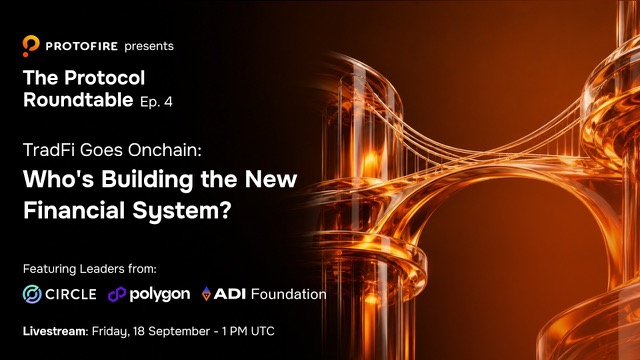
Why banks adopted stablecoins before tokenized deposits
 Ilia Shirobokov, ADI Foundation
Moment at 08:45Episode 4 · TradFi Goes Onchain: Who's Building the New Financial System?
We build deposit token platforms for banks: the permissioned token contract, a mint and burn service tied to the core banking ledger, daily reconciliation, issuer key custody, and KYC and sanctions checks on every holder.
Tokenized deposit platforms for banks →Get a proposal
Tell us what you are building. An engineer reads it, we have a short call, and the written proposal follows within one business day.
Budget
An NDA is available from the first message and can cover anything you share. How it works