Hiring Blockchain Developers: The 2025 Playbook
In the rapidly accelerating digital economy of 2025, the success of any blockchain, Web3, or crypto project depends on one thing: building a strong technical team. A big lack of talent has turned hiring blockchain developers into a tough race. For companies looking to hire web3 developers, clinging to slow, traditional methods is a recipe for failure. Winning in this market requires a new playbook for efficient and precise crypto recruitment.
Why Hiring in Web3 Is a Different Game
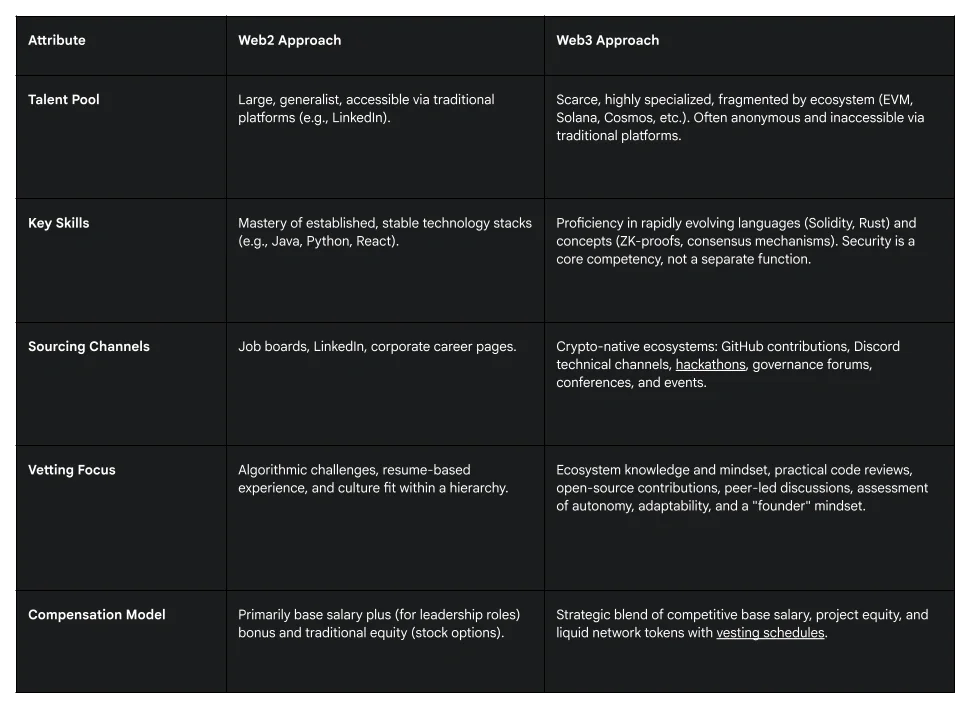
Trying to hire Web3 talent with a Web2 playbook is the biggest mistake you can make. It’s a direct path to frustration, wasted money, and wrong hires. The rules are completely different, shaped by a unique market, fast-moving tech, and a distinct culture. If you want to build a winning team, you first need to understand what makes Web3 hiring unique.
The most obvious difference is simple: there aren’t enough qualified developers. This isn’t a temporary trend; it's a structural shortage. Demand for blockchain expertise is exploding, while the supply of skilled professionals can't keep up.
This imbalance directly drives up salaries. In the U.S., the average blockchain developer earns well into six figures, and specialists command even higher pay. This means crypto recruiting is expensive, and every hiring decision has a major financial impact. Teams that don't grasp this reality make lowball offers, lose the best candidates, and drag out their search for months.
On top of the talent shortage, the technology is evolving at breakneck speed, creating a fragmented and constantly changing tech stack. While Solidity is still key for Ethereum, the growth of chains like Solana and Polkadot has created huge demand for Rust developers. At the same time, niche skills in areas like ZK-proofs or the Cosmos SDK are creating even smaller, more specific talent pools.
Because of this, searching for a generic "blockchain developer" no longer works. Your hiring strategy must be ecosystem-specific. A Solana project needs a Rust developer who knows the Anchor framework; an Ethereum DeFi protocol needs a Solidity expert who masters gas optimization. This specialization shrinks the talent pool and makes finding and vetting candidates much harder than in Web2.
Perhaps the most crucial and least understood differentiator is the "decentralization mindset." This is not a technical skill but a cultural and philosophical orientation that is a prerequisite for success in the ecosystem. The best Web3 talent is not simply looking for a job; they are looking to join a mission. This mindset is characterized by several key traits identified through extensive interviews with industry professionals:
- Ownership & Autonomy. Top candidates think and act like founders. They are self-starters who tackle problems without being told and excel in decentralized teams with minimal oversight. Give them problems to solve, not tasks to complete
- Constant Curiosity. In Web3, today's top tech is tomorrow's legacy system. The ability to constantly learn, adapt, and unlearn old patterns is more valuable than mastering any single tool.
- Community-Driven. Web3 is built on open-source collaboration. The best people are active in their communities - contributing to code, weighing in on governance, and helping others on Discord. The best recruiting strategy is to find these people where they live.
Finally, there's a practical challenge: anonymity. Many of the best developers use pseudonyms. You won't find them on LinkedIn, they don't have traditional resumes, and you can't vet them through normal corporate channels. Reaching them requires a native understanding of the crypto world and entirely new sourcing methods.
This anonymity also increases the risk of fraud. Scammers thrive in the remote, high-stakes crypto space. You need to protect your company from candidates who fake their skills, and candidates need protection from scam projects. This makes a strong vetting process more than just a quality check - it's a security essential.
The talent shift: Why Web3 hiring plays by different rules
Step 1: Define the Exact Developer You Need
The most critical step in hiring is precision. Vague job descriptions are the #1 cause of wasted time - they attract the wrong candidates and scare away the experts you actually need. Before you write a single line, you have to get specific. Don't just look for a "blockchain developer"; define the exact specialist your project requires. The market now has distinct roles, each with its own skills, responsibilities, and salary expectations.
The most common mistake is creating a "unicorn" job description that combines three roles into one. This immediately signals to top talent that you don't understand the market. To avoid this, start with a clear classification of the main developer roles:
- Smart Contract Developer. This is usually the most critical and in-demand role for any dApp. These engineers build your on-chain logic - they write, test, and maintain the smart contracts that power your protocol. Their world revolves around security, gas efficiency, and flawless code. Because a single bug can lead to a catastrophic loss of funds, the stakes are incredibly high. A great candidate will be an expert in Solidity or Rust, understand security risks like reentrancy attacks, and know frameworks like Hardhat or Foundry. Today, the best developers are also skilled auditors; it's no longer enough to just build - you have to build safely.
- Protocol Engineer (or Core Developer). While smart contract developers build applications on the blockchain, protocol engineers build the blockchain itself. They work on the core infrastructure: consensus mechanisms, P2P networking, cryptography, and client software. This role requires a deep knowledge of distributed systems and expertise in languages like Rust, Go, or C++. They are the rarest and highest-paid developers in Web3.
- Full-Stack Web3 Developer. This developer is the essential bridge between your smart contracts and your users. They build the front-end applications that people interact with, using tools like React and connecting to the blockchain with libraries like ethers.js. They also handle the backend, indexing data from the chain with services like The Graph and integrating other APIs. A great full-stack developer hides the blockchain's complexity, creating a smooth, intuitive experience for the user.
The best developers in any of these roles have a "T-shaped" skill set. The vertical bar of the "T" is their deep expertise in a specialty, like Solidity security or Rust performance. The horizontal bar is their broad understanding of the entire Web3 stack - from blockchain architecture and cryptography to essential tools like Git.
When you clearly define the role you're hiring for, you create a targeted job description that speaks to the right experts. This initial clarity saves you time and ensures you attract specialists, not generalists, making your entire search faster and more effective.
Step 2: Find Blockchain Talent Where Others Can't
The most expensive mistake you can make is looking for Web3 talent in Web2 places. LinkedIn and job boards will only get you so far, often attracting a shallow pool of candidates and even scammers. The truth is, top-tier developers - especially the anonymous builders respected throughout the community - aren't on those platforms. To find this hidden talent, you have to go where they are: the crypto-native ecosystems where they actually work and collaborate.
Sourcing in Web3 is active, not passive. You can't just post a job and wait for applicants. It’s an intelligence-gathering process that requires technical knowledge and a bit of detective work. The best channels are platforms where people do things, not just post resumes:
- GitHub. A developer's GitHub is their real portfolio. Don't just glance at their profile; dig deep. For example, if you're building a lending protocol, analyze the commit histories of developers contributing to projects like Aave or Compound. This gives you direct proof of their skills and their interest in your field.
- Discord. This is the town square for Web3. It can be noisy, but a protocol's technical channels are a goldmine. Look for people who consistently ask smart questions and give detailed answers to complex problems. They are often skilled engineers with hands-on knowledge. Joining these conversations is a great way to connect with candidates who aren't actively looking.
- Hackathons. This is where you find raw, motivated talent. The participants are passionate enough to spend a weekend building something new, showing off skills a resume can't capture. You'll find many developers here who aren't on other professional platforms. Tracking the winners of major hackathons from groups like ETHGlobal or Chainlink is a proven way to find rising stars.
These channels are powerful, but they are also extremely time-consuming. The signal-to-noise ratio is low, and finding one ideal candidate can mean filtering thousands of GitHub profiles and Discord messages. It takes immense effort and expertise.
This is where a vetted talent network gives you an edge. A specialist partner like TalentLayer has already done the hard work of building and curating a network of pre-vetted candidates. We cut through the noise, so you can skip the most painful part of sourcing and go straight to a shortlist of qualified blockchaindevelopers.
Ultimately, hiring the best blockchain developer talent means looking for proof of skill - not in resumes, but in public code, thoughtful technical debates, and ambitious hackathon projects. The teams who learn to navigate these native ecosystems will always win.
Step 3: A Vetting Process That Actually Works
Your vetting process is your biggest risk - or your greatest advantage. A wrong process doesn't just create delays; it wastes money, burns out your team, and almost guarantees a mishire. In Web3, one wrong hire can lead to catastrophic security flaws, kill team morale, and grind your productivity to a halt. The goal isn't just to find a technician; it's to find someone with the right mindset and motivation to excel in Web3.
At TalentLayer, our vetting model is designed to be rigorous. We filter out 90% of applicants before they ever speak to your core team, saving you over 20 hours for every single hire. We do this through a multi-stage process where each step gets more specific:
- Motivational & Role-Fit Screening. First, we go beyond the resume to understand a candidate's real motivations. Are they passionate about your mission, or just chasing a paycheck? This initial screen weeds out the tourists and identifies people who are in it for the long run.
- Peer-Led Technical Assessments. The best technical interviews aren't abstract whiteboard puzzles; they are practical conversations with senior engineers. We ground the discussion in the candidate's past work, asking probing "why" questions about their design choices and trade-offs. This "vetted by builders" approach quickly separates real expertise from memorized talking points.
- Practical Test Projects. For key roles, a small take-home project is the best way to see skills in action. The task mirrors the work they'd actually be doing. We evaluate not just the code, but also how well they follow instructions, manage their time, and communicate their thought process. The follow-up code review is often more revealing than the code itself.
- Evaluating the "Decentralization Mindset." This step assesses the soft skills and mindsets that are non-negotiable in Web3: autonomy, adaptability, and ownership. We use targeted behavioral questions to see how they think, deep diving into specific examples and situations from real life.
- Comprehensive Reference Checks. The final step is a thorough reference check. Speaking with former managers and colleagues validates a candidate's skills, work ethic, and ability to collaborate. It’s the final layer of confidence before an offer is made.
These questions show how a candidate thinks, whether they're comfortable with uncertainty, and if they act like an owner instead of an employee. In the fast-paced world of Web3, these traits often matter more than raw technical skill. A developer with 8/10 tech skills but a 10/10 mindset is almost always the better hire. This rigorous process ensures you find people who won’t just perform - they’ll elevate your entire team.
Step 4: Craft a Winning Compensation Package
In the Web3 talent market, compensation is more than just a number - it’s a strategic tool. It signals your project's value, aligns incentives, and attracts the right kind of people. A winning offer isn't just about matching a salary; it's about creating a package that gives top talent a real stake in your success.
The modern Web3 package has three core parts:
- Base Salary. This is the stable, predictable foundation of the offer. It provides financial security and covers living expenses. Base salaries vary widely with experience, specialty, and location - for example, salaries in the U.S. are significantly higher than in regions like Eastern Europe or Latin America.
- Tokens. This is what makes Web3 compensation unique and is the best way to align incentives. Offering your project's native token gives team members direct ownership in the network they're building. The potential for a massive upside is a major draw for candidates who believe in your vision.
- Equity (Stock Options). For incorporated startups, traditional stock options are still a key component. Equity (with a vesting schedule) gives team members ownership in the business itself, aligning their interests with the company's long-term success.
Finding the right balance between these three parts is a strategic choice that filters for the right people. A higher base salary will attract more risk-averse talent. A lower base with more tokens and equity will attract entrepreneurial candidates who are betting on the long-term vision. For example, an early-stage startup might offer a modest salary but a large token and equity package to land a founding engineer motivated by a massive potential upside.
Structuring a compelling offer is a challenge. A specialist partner like TalentLayer can provide the market data and expertise you need to create a package that attracts the right talent for your specific stage and goals.
Step 5: Move Fast or Lose the Best Talent
In Web3, speed is everything - in your product and your hiring. If your process is slow, bureaucratic, or indecisive, you will consistently lose the best candidates to faster competitors.
Our benchmark at TalentLayer is a 2-4 week time-to-hire, from first contact to a signed offer. This is a world away from the multi-month timelines still common at other companies. That delay is more than an inconvenience; it’s a huge opportunity cost. In the time it takes you to hire, a faster competitor has already onboarded a key engineer, shipped a new feature, and captured market share.
A slow process also creates a terrible candidate experience. The best developers have multiple offers and no patience for disorganization. Long delays, bad communication, and too many interview rounds are the top reasons they drop out. If a top candidate withdraws, it’s a clear sign you’re being beaten by the competition.
Hiring in 2-4 weeks isn’t about cutting corners; it’s about being efficient and prepared. You have to shift from a reactive to a proactive hiring model. Here’s how:
- Build a Proactive Pipeline. The fastest way to hire is to have qualified, vetted candidates ready before you have an open role. This means you should always be sourcing and building relationships with promising developers.
- Run Hiring Like a Sprint. Treat every hire like a product sprint. Define the role clearly, streamline the interview process, and give candidates fast feedback at every stage.
- Act Decisively. Once you’ve found the right person, move with urgency. Hesitating at the offer stage is the #1 way to lose your top candidate. A hiring partner adds huge value here by providing expert recommendations to help you make a confident final choice.
Ultimately, your hiring process reflects your company's culture. Top candidates notice everything, and they see the interview process as a preview of what it’s like to work with you. A fast, professional, and decisive process signals a high-performing team. A slow, chaotic one signals the opposite. In the race for Web3 talent, the fastest teams always win.
Build vs. Buy: Your Recruitment Strategy
As you scale, you face a critical decision: build an in-house hiring team or partner with a specialized agency? This isn't just an operational choice - it directly impacts your speed, cost, and quality of hires. In Web3, the "build vs. buy" math almost always favors a partnership.
Building an in-house team is a major, long-term investment. It only makes sense for large, well-funded companies with a consistent, high-volume need (e.g., 20+ hires per year). The main advantages are deep cultural alignment and total control over your hiring process.
But for most Web3 projects - especially startups, DAOs, and high-growth teams - partnering with an agency like TalentLayer is faster, more flexible, and more cost-effective. Here’s when a partnership makes the most sense:
- When you need to hire fast.
- When you need a rare specialist.
- When your core team is lean.
- When you need to reduce hiring risk.
The ROI of partnering with an agency like TalentLayer is clear. We filter 90% of candidates, saving clients over 20 hours of screening time per hire. Our focus on quality fit leads to a 95% retention rate after 12 months, preventing the massive costs of a wrong hire. And our 2-4 week time-to-fill gives you the speed you need to win.
For most Web3 teams, the choice is simple: focus on building your product, and leave the recruiting to the experts.
Conclusion: Stop Searching, Start Building
Hiring in Web3 is no longer just an HR task - it’s a core strategic function that determines if your project wins or loses. Success isn't about luck; it's about having a disciplined and specialized approach.
The old playbook is broken. Winning today means:
- Defining roles with precision.
- Sourcing talent from crypto-native ecosystems, not just LinkedIn.
- Vetting for mindset as much as technical skill.
- Crafting smart compensation packages with salary, tokens, and equity.
Executing this strategy is a huge challenge. It takes time, expertise, and a network that most companies don't have. The months you waste on a failed search are months your competitors are shipping products. That’s why for teams that value speed and quality, partnering with a specialist agency like TalentLayer is the smartest path forward.
The choice is clear: either waste time on a broken process or work with a partner who can deliver elite, vetted talent in weeks, not months.
If you’re ready to stop searching and start building, we’re ready to help.
Explore how TalentLayer delivers Web3-native talent to accelerate your project - book a call.
Share this article on
Share this article on