Safe (Gnosis Safe) Multisig Deployment
Safe deployment is the work of bringing the multisig smart-account wallet to a specific EVM chain: deterministically deploying the audited Safe contract suite, standing up the backend and indexed UI, and keeping it current as Safe ships upstream releases.
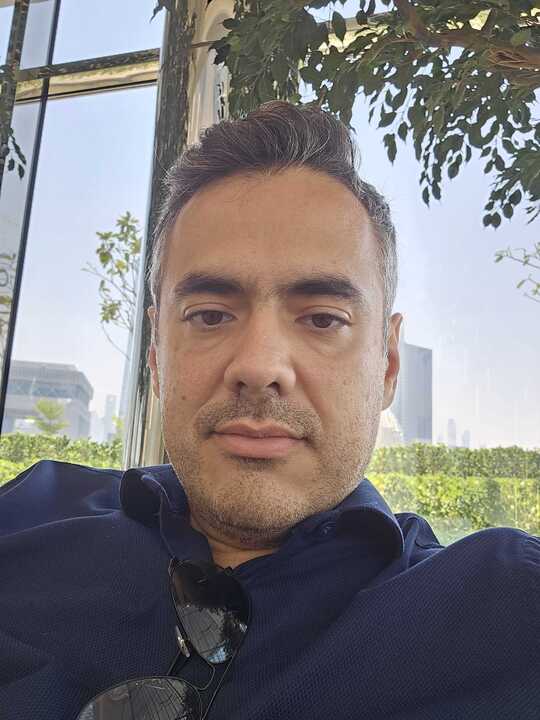
Reviewed by Luis Medeiros, Field CTO at ProtofireLast reviewed: June 2026






















A Safe deployment puts Safe, the multisig smart-account wallet formerly known as Gnosis Safe, onto a blockchain, so DAOs, protocols, and treasuries can hold assets behind multi-signature approval instead of a single private key. A Safe multisig only executes a transaction once a defined quorum of owners signs it (for example 2-of-3 or 3-of-5), which is the custody standard institutional capital and on-chain treasuries expect before they commit funds.
Protofire has been a partner of the Safe team since 2017, contributing directly to its core codebase, and is an official Safe Guardian; Protofire-deployed networks secure $2B+ in TVL across 120+ EVM networks, so when we deploy Safe on your chain it comes from the team that has done it more than almost anyone, not from a one-off fork. We deploy the audited Safe contract suite, stand up the full backend and indexed UI, brand it to your network, and keep it current as Safe ships upstream releases roughly twice a month, the result is a production multisig your ecosystem can trust on day one, and that stays trustworthy after launch.
The Safe custody and governance stack Protofire builds and maintains
Each layer ships as a maintained service, from deterministic contracts through live monitoring, not a one-time deployment.
Safe Contract Suite
Off-chain Services
Branded Interface
Modules and Guards
Policy and Governance
Monitoring and Incident Response
What we deliver
Safe (formerly Gnosis Safe) is the most widely used multisig smart-account wallet on Ethereum and EVM networks. A Safe deployment is the work of bringing that wallet to a specific chain: deterministically deploying the audited Safe smart-contract suite, GnosisSafe.sol, the proxy and proxy factory, MultiSend, and the supporting libraries, then running the off-chain services a usable wallet needs.
Those services are a transaction service, an API gateway, a configuration service, and an event listener that indexes on-chain activity, plus a branded fork of the Safe interface. Because the contracts are deployed deterministically from the official audited source with no code changes, your Safe addresses and behaviour match every other Safe in the ecosystem, which is exactly what lets DeFi protocols, DAOs, and institutional signers treat it as the standard they already know.
It is account abstraction in production: a smart-contract account, not an externally owned key.
Most teams discover that the contracts are the easy part. Deploying Safe on a new EVM chain is work we run as scoped milestones:
Research and compatibility analysis: validate RPC behaviour and EVM-opcode compatibility, because a rollup or app-chain that diverges from mainnet is where deployments quietly break.
Deterministic contract deployment and verification: deploy and verify the audited Safe contract suite with no code changes, so your addresses match the rest of the ecosystem.
Infrastructure and monitoring setup: stand up staging and production on AWS: the transaction service, gateway, config service, event-listener indexer, and monitoring.
Backend and frontend deployment with functional tests: wire wallet connectors such as MetaMask and WalletConnect, and customize the UI to your network's branding and domain.
Documentation and an optional infrastructure-ownership handover.
A first network typically takes one to three weeks; once your infrastructure exists, each additional network is roughly 70% faster. We have run this process for Linea, Mantle, Blast, Optimism, and many others, migrated six networks to the safe.global page, and contributed zkSync support, so edge cases on rollups and app-chains are familiar ground, not first-time experiments.
A deployed Safe is a starting point you can extend. Safe Modules add functionality that executes outside the normal owner-confirmation flow, spending-limit modules, recurring payments, automation, and self-custodial payment solutions built on audited Safe modules. Safe Guards do the opposite: they enforce extra checks on every transaction before it executes, letting you encode policy such as allow-lists or transfer restrictions directly into the multisig.
We also build Safe Apps, dApps that run natively inside the Safe interface so users can swap, bridge, stake, and transact without leaving their wallet, and convert existing web3 apps into Safe Apps. For programmatic control, we work with the Safe{Core} SDK, including the protocol-kit and api-kit, so your team can create Safes, propose and execute transactions, and integrate Safe into backends and dApps beyond the standard UI. This is where a generic multisig stops and a customizable smart-account platform begins.
Safe deployment is for the teams whose users expect Safe by name. Chains and foundations, new L1s, L2 rollups, and app-chains, need a branded, maintained multisig before DeFi protocols, DAOs, and large treasuries will commit capital; the absence of one quietly costs deals and TVL to networks that already have it.
DAOs and protocols need collaborative, multi-signature treasury management instead of a single point of failure. Institutional participants and RWA issuers need battle-tested, self-custodial custody to satisfy internal controls and compliance. And modular-rollup and app-chain operators building a whole stack would rather a dedicated partner own Safe, deployment, updates, and incidents, than pull their core engineers onto wallet infrastructure. If your chain is EVM-compatible, live or near mainnet, and growing an ecosystem, a maintained Safe is table-stakes infrastructure.
An official Safe Guardian since 2017
Protofire is a blockchain engineering company that has shipped 250+ projects across 60+ networks and 95+ protocols since 2016. On Safe specifically, we have been a partner of the Safe team since 2017, contributed directly to its core codebase, and hold official Safe Guardian and Safe Wallet Partner status, which gives us quick PR-review access and close technical collaboration with the Safe core team.
Protofire-deployed networks secure $2B+ in TVL across 120+ EVM networks; we have migrated six networks to the safe.global page and contributed zkSync support, and we maintain dedicated engineering focus exclusively on Safe. Networks we have stood Safe up on include Linea, Mantle, Blast, and Optimism, each running a branded, indexed interface backed by 200+ DeFi app integrations.
Beyond Safe, our credentials include maintaining Solhint, the open-source Solidity linter used by 1M+ developers, and running a top-3 indexer in The Graph ecosystem. The proof is at safe.protofire.io, the gateway to every Safe we run.
From request to a live, maintained Safe
When a chain comes to us without a multisig, the request is usually the same: "Every serious DeFi team and DAO asks if Safe is live on our network before they deploy, and it isn't." Our approach starts before any contract is deployed. In a scoping milestone we analyze RPC behaviour and opcode compatibility, because a rollup or app-chain that diverges from mainnet is where deployments quietly break.
We then deploy the audited Safe contract suite deterministically, verify it, and stand up staging and production environments with monitoring, the transaction and gateway services, and a UI forked and branded to the network's domain.
The outcome is a Safe that looks native, like safe.linea.build, multisig.mantle.xyz, blast-safe.io, or safe.optimism.io, backed by indexing and 200+ DeFi app integrations, with MetaMask and WalletConnect wired in. But the deployment is not the finish line. Safe ships frontend, backend, and contract updates roughly twice a month; chains that self-deploy tend to drift into a stale, unmaintained instance within months, which is worse than having no Safe at all because it erodes trust.
As a Guardian with direct line to the Safe core team, we track and apply those upstream releases, add Modules, Guards, and wallet connectors as the ecosystem matures, and can transfer full infrastructure ownership when you want it. The deliverable is not a one-time fork, it is a multisig your network can still rely on a year later.
“Chains that self-deploy Safe tend to drift into a stale, unmaintained instance within months, worse than having no Safe because it erodes trust.”
Safe deployment model
| Self-deploy and maintain | Protofire Guardian maintenance | |
|---|---|---|
| Deployment to new chain | 1-3 weeks if you have experience | 1-3 weeks; additional chains ~70% faster |
| Upstream updates | Safe ships updates ~2x/month, you track them manually | Tracked and applied automatically by Guardian team |
| Guardian access | Community-only access to Safe core team | Official Safe Guardian, direct PR-review access to core team |
| Long-term reliability | Drift into stale instance within months common | Kept current, monitored, incidents handled |
| Modules & extensions | Added as needed, ad-hoc | Rolled out systematically as ecosystem matures |
FAQ
What is a Safe (formerly Gnosis Safe)?
What's the difference between Safe and a standard multisig?
How do you deploy Safe on a new chain?
We're a chain or foundation, why do we need a Safe deployment?
What are Safe Modules and Guards?
Who maintains the deployment after it goes live?
Apply to build with us
Tell us what you are building; a link helps but is not required. We talk it through on a call, and a written proposal follows within one business day of the call.
Budget
An engineer reads your link before the call. The written proposal arrives within one business day after it. How it works